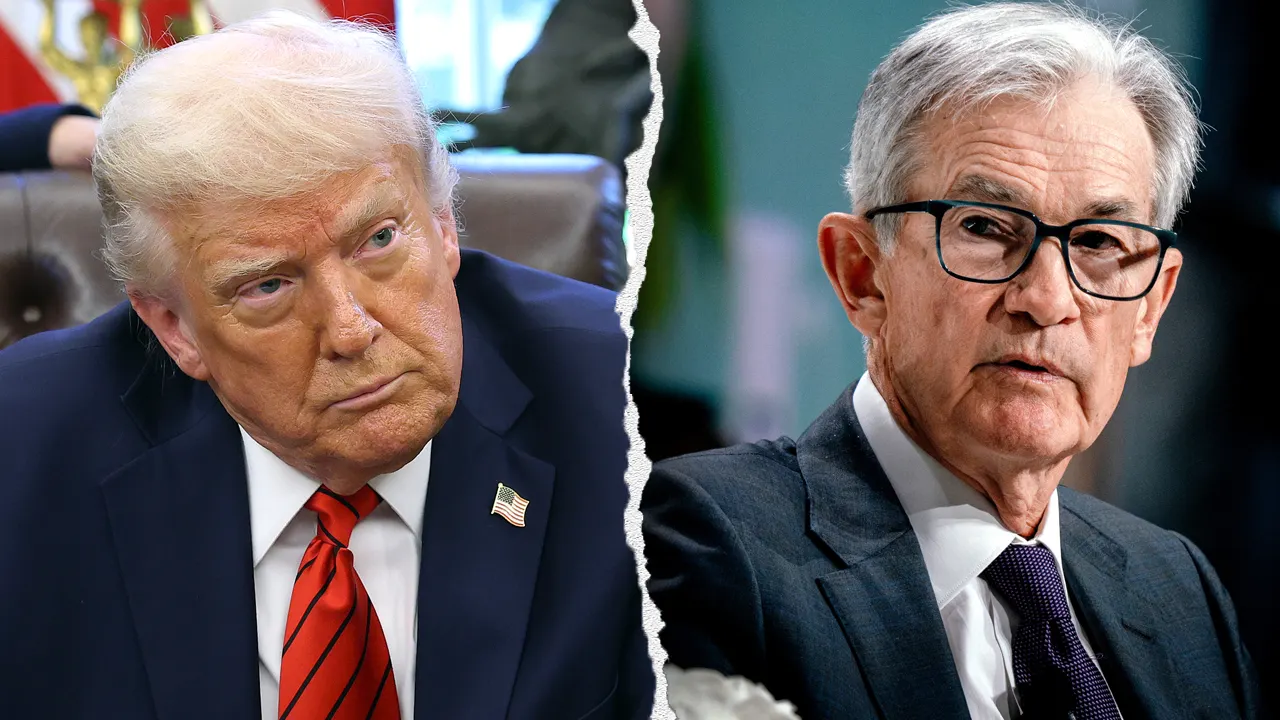
Trump’s renewed pressure on Fed Chair Powell signals a deeper political push that may threaten the central bank’s core independence.
Former President Donald Trump’s renewed and more coordinated attacks on Federal Reserve Chair Jerome Powell go far beyond typical political rhetoric. What’s emerging is a strategic, multifaceted attempt to weaken the Fed’s independence and align monetary policy more closely with Trump’s economic goals.
A Coordinated Political Offensive
Trump’s long-standing criticism of Powell is evolving into something more calculated and institutional. While markets have grown desensitized to Trump’s verbal jabs at Powell, recent developments suggest this campaign is no longer just for show. It now involves a full-court press from Trump’s top advisers using legal mechanisms, public messaging, and bureaucratic levers to corner the Fed.
This week, Russell Vought, former Director of the Office of Management and Budget and a close Trump ally, issued a public letter accusing Powell of potentially violating federal law regarding a planned renovation of the Federal Reserve’s headquarters. That’s not just political noise—it’s a direct challenge to the legitimacy of Powell’s decision-making and authority.
Beyond Rate Cuts: Targeting the Fed’s Independence
While Trump has long pushed for lower interest rates to stimulate the economy, the current effort isn’t just about easing monetary policy. It’s about realigning the Federal Reserve’s structure and authority in favor of the executive branch. According to sources close to the Trump team, this pressure campaign isn’t meant to oust Powell—yet. Rather, it’s a way to demonstrate that the Fed’s autonomy is conditional and could be reshaped under a second Trump presidency.
This poses serious implications. Trump has openly expressed frustration at the Fed’s refusal to follow his lead, famously saying, “I call him every name in the book trying to get him to do something… I’m nasty, I’m nice. Nothing works.” That admission underscores both his dissatisfaction and his willingness to abandon conventional boundaries between political leadership and central bank operations.
The Vought Letter: Legal Threat or Political Theater?
Vought’s letter specifically cites Powell’s congressional testimony and its relation to the National Capital Planning Act—a 1952 statute requiring federal building renovations to be approved by the National Capital Planning Commission. He publicly questioned whether Powell’s conduct adhered to this rule, creating a legal pretext for scrutiny.
When asked whether Trump supports Fed independence, Vought replied, “That question is immaterial.” That chilling answer signals a shift: in the Trump worldview, institutional independence is secondary to executive will.
This type of bureaucratic maneuver—attacking Powell not through monetary arguments but administrative technicalities—reflects a sophisticated political playbook. The Trump camp is signaling that nothing, not even long-standing norms like central bank independence, is off the table.
Economic Consequences: Market Jitters and Policy Uncertainty
For markets, this raises both immediate and long-term concerns. In the short term, if Powell and the FOMC are seen as bending to political pressure, expectations for rate cuts may rise—potentially lifting equities. But that gain comes at a dangerous cost: the erosion of investor confidence in the Fed’s neutrality.
Long term, this politicization could reduce the dollar’s global credibility, stoke inflation fears, and increase borrowing costs as bond markets demand higher yields to compensate for rising policy risk. The Fed’s greatest asset has always been its credibility—Trump’s offensive risks destroying that.
The Bigger Picture: Executive Power and Institutional Overreach
This is not an isolated clash between a president and a central banker. It’s a broader test of how far presidential authority can extend into independent institutions. If Trump regains the White House and continues down this path, Powell may not be replaced, but the Fed itself could be restructured to function more as a political tool than an autonomous body.
This approach aligns with Trump’s broader philosophy of centralized executive power and a disregard for institutional checks. Whether it’s the Department of Justice, the military, or now the Federal Reserve, Trump appears eager to test—and possibly rewrite—the boundaries of institutional independence.
Conclusion: A Warning Sign for Democratic Governance
This is more than a fight over interest rates. It’s a high-stakes battle over whether the Federal Reserve remains an independent guardian of economic stability or becomes a subservient branch of presidential will. For investors, economists, and citizens alike, this escalating campaign should not be dismissed as politics-as-usual. It’s a fundamental challenge to the architecture of American economic governance.