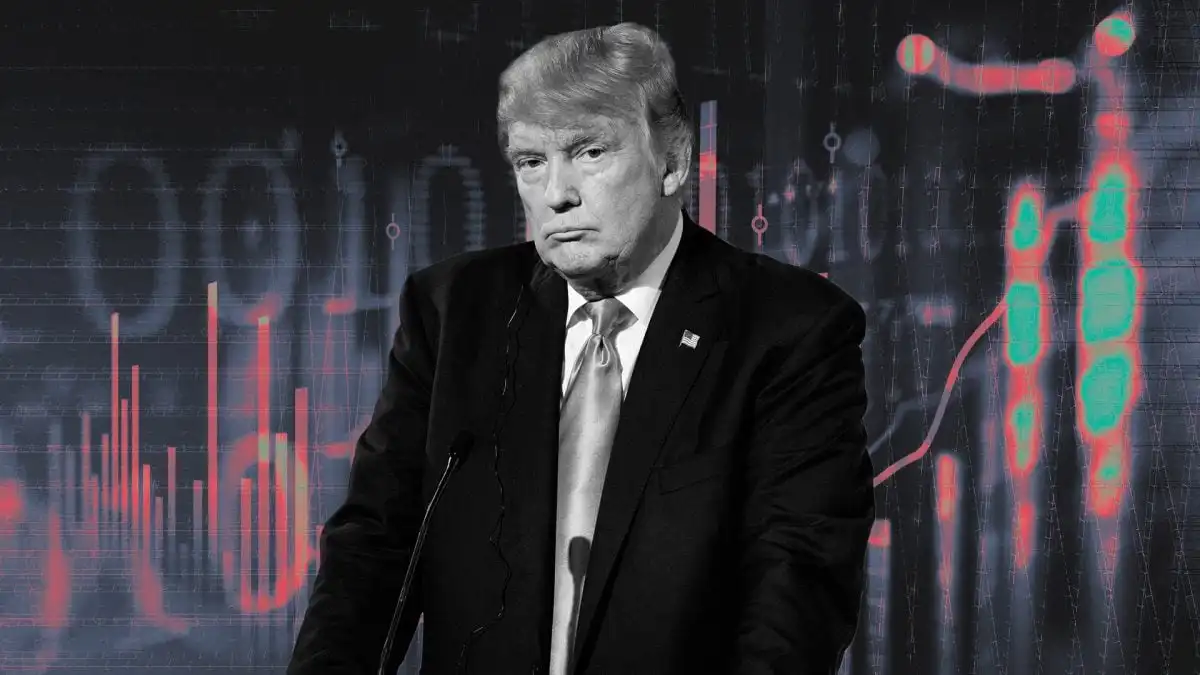
Trump announces a 50% tariff on European goods starting June 1 amid a deadlock in trade talks, signaling significant impacts on global markets.
Former President Donald Trump has declared his intention to impose a 50% tariff on imported goods from the European Union starting June 1 due to stalled trade negotiations—an action that could significantly escalate trade tensions between the U.S. and Europe.
50% Tariff on European Goods; Trump Cites Deadlock in Trade Negotiations
Donald Trump, the former U.S. president, recently announced that due to a standstill in trade negotiations with the European Union, he plans to impose a 50% tariff on goods imported from the region starting June 1. This decision comes amid escalating trade tensions between the U.S. and the EU, which could have far-reaching economic consequences for both parties and global markets.
In a post on his social media platform, Truth Social, Trump emphasized his expectation that American companies—especially Apple—relocate their manufacturing to the U.S. He further stated that imported goods, such as iPhones not manufactured domestically, would face a minimum 25% tariff. Addressing Apple CEO Tim Cook, he wrote: “I have long ago informed Tim Cook of Apple that I expect their iPhones sold in the United States to be made in the United States, not India or anywhere else.”
This stance caused Apple’s shares to drop nearly 3% in premarket trading, reflecting investor concerns over the potential financial impact of the new tariffs on the company’s revenue.
Market Reaction to Rising Tariffs and Forecast Uncertainty
Investor concerns over the implications of these tariff policies have intensified across various markets. A prominent example is the sharp decline in shares of Deckers Outdoor, the maker of well-known brands Hoka and Ugg, which plummeted more than 18% after the company refrained from issuing its full-year financial forecast due to tariff-related uncertainties.
Deckers, which produces a substantial portion of its goods in China, cited the evolving global trade policies and unpredictable tariff environment as reasons for withholding guidance for fiscal year 2026. This decision has undermined market confidence in the company’s financial stability.
Broader Economic Concerns and Impact on U.S. Stock Indices
These developments have also influenced the broader U.S. economic landscape. Major U.S. stock indices ended the week with a downward trend, with both the Dow Jones Industrial Average and S&P 500 declining approximately 0.3%. The Nasdaq also fell by 0.4%.
Additionally, worries about the federal budget deficit and the economic repercussions of trade policies continue to persist. The yield on the 10-year U.S. Treasury note fell to 4.47%, while prices for gold and oil rose. Meanwhile, Bitcoin experienced a slight decline but remained near its all-time highs around $111,000.
Strong Financial Performance by Intuit Amid Uncertainty
Contrasting the uncertain economic backdrop, Intuit, the parent company of TurboTax and Credit Karma, reported stronger-than-expected third-quarter results and raised its full-year revenue forecast. The company now anticipates fiscal 2025 revenue between $18.72 billion and $18.76 billion, a notable increase from prior estimates.
Intuit’s shares surged nearly 9% in premarket trading, reflecting investor confidence in the company’s robust performance and effective management in a volatile economic environment.
Potential Global Economic Implications of New Tariffs
The imposition of a 50% tariff on European goods and at least 25% tariffs on non-U.S.-made imports aligns with Trump’s protectionist approach aimed at bolstering domestic manufacturing. However, these measures risk intensifying trade conflicts, reducing global trade volumes, and triggering heightened volatility in financial markets.
Investors and multinational corporations are closely monitoring these developments to adapt their strategies accordingly. This situation may create new opportunities and challenges, especially for industries heavily reliant on global trade.