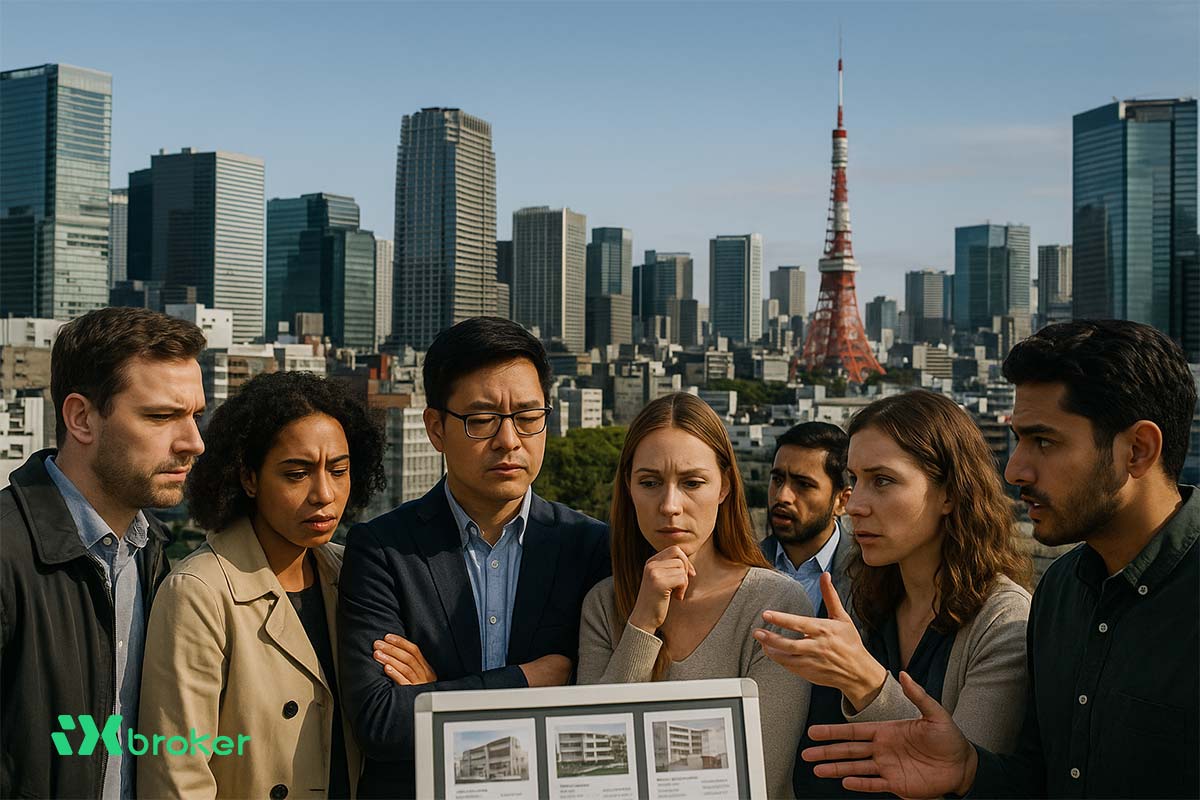
Tokyo’s prime real estate is in the spotlight as condominium prices surge to record highs, drawing increased political scrutiny over the role of foreign capital.
In 2024, the average price of new condos in Tokyo’s central 23 wards reached 111.81 million yen (around $760,000), according to the Real Estate Economic Research Institute. The median price climbed 9% year-on-year to 89.4 million yen, marking a steep 64% increase since 2021, far outpacing the broader Tokyo region’s 26% rise.
Despite the boom, affordability remains a growing concern as Japan continues to lag behind developed peers in wage growth. OECD data for 2024 ranked Japan 25th out of 34 members in purchasing power parity-adjusted annual wages, averaging $49,446.
Political Push to Restrict Foreign Buyers
The real estate rally has fueled political calls to curb foreign property ownership, with the issue featuring prominently in the recent Upper House elections. Unlike countries such as Australia, Canada, and Singapore, Japan currently imposes virtually no restrictions on overseas buyers.
The Democratic Party for the People (DPFP), which made strong gains in July, is preparing to introduce a bill this autumn that would limit foreign purchases of real estate. Party leader Yuichiro Tamaki argues that speculative buying by overseas investors has contributed to soaring home prices. He has floated measures such as a “vacancy tax” targeting unused foreign-owned property.
The right-wing populist Sanseitō party, known for its “Japan First” platform, is also preparing its own proposal to restrict foreign acquisitions, although it has yet to outline a clear timetable.
National Security and Economic Concerns
Political analysts suggest the debate is not only about housing affordability but also about national and economic security.
“Foreign property ownership has become intertwined with broader discussions on Japan’s foreign population,” said Tobias Harris of Japan Foresight, noting that restrictions are legally easier to implement than other immigration policies.
A Mitsubishi UFJ Trust & Banking survey in March 2025 showed that in prime districts such as Chiyoda, Shibuya, and Minato, 20–40% of new apartments are purchased by foreign buyers. Still, experts caution that domestic investors also play a major role in driving up demand.
Despite the Bank of Japan’s rate hikes since 2024, borrowing costs remain low in real terms, keeping liquidity high and funneling capital into property markets.
Urban-Rural Divide: Booms and Abandonment
While Tokyo’s housing market overheats, rural Japan continues to struggle with depopulation and stagnation. The country had about 9 million vacant homes (akiya) in 2023, largely in declining rural towns.
These properties are often in disrepair, require costly renovations ranging from $20,000 to $300,000, and face cultural resistance due to Japan’s preference for new housing.
However, akiya are gaining interest among foreign buyers seeking traditional homes at lower prices. Parker Allen, co-founder of Akiya & Inaka, noted that restrictions should target metropolitan hotspots rather than rural markets.
“If the aim is to protect locals from being priced out, then the focus has to be on Tokyo and other major cities,” he said.
Summary
Tokyo’s luxury property market has surged, with condo prices up 64% in just four years, prompting concerns about affordability and foreign investment. Opposition parties, particularly the DPFP and Sanseitō, are preparing legislation that could restrict foreign ownership, framing the issue as both an economic and national security concern. Surveys show foreign buyers account for up to 40% of new apartment sales in central wards, though domestic investors also drive demand. Meanwhile, rural Japan faces the opposite problem—millions of abandoned homes (akiya)—highlighting a stark urban-rural divide in Japan’s real estate market.