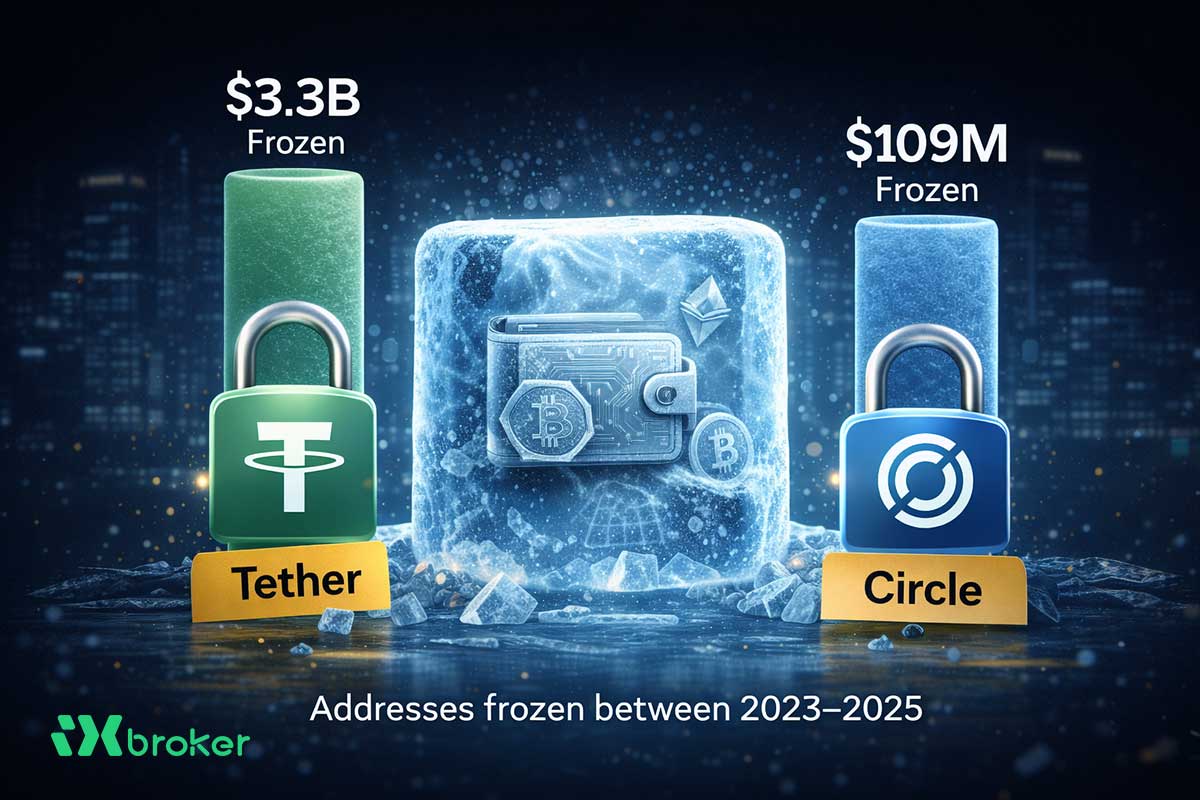
Tether and Circle adopted sharply different approaches to stablecoin enforcement between 2023 and 2025, with Tether freezing nearly 30 times more value than its closest rival, according to data published by AMLBOT. The figures highlight contrasting compliance models among the two largest stablecoin issuers as regulatory scrutiny intensifies.
AMLBOT data shows that Tether froze roughly $3.3 billion worth of stablecoins over the period, compared with about $109 million frozen by Circle. The disparity underscores differences in how each issuer balances rapid intervention, law enforcement cooperation, and legal formalities.
Tether’s aggressive enforcement model
According to the report, Tether blacklisted 7,268 addresses between 2023 and 2025. More than 2,800 of these actions were carried out in coordination with US law enforcement agencies, targeting funds linked to scams, fraud, and other illicit activities.
A significant share of frozen Tether tokens was concentrated on the Tron network, which accounted for more than 53% of the total value frozen. Tether also operates a “freeze, burn and reissue” mechanism, allowing recovered tokens to be invalidated and reissued under controlled conditions. On Ethereum alone, banned wallets currently hold around $1.54 billion worth of frozen Tether, reflecting the scale of enforcement on the network.
Circle prioritizes legal restraint
By contrast, Circle froze 372 addresses during the same period, with a total value of approximately $109 million, according to AMLBOT’s dataset. Circle’s policy limits freezes to cases involving explicit court orders or regulatory directives, and the company does not burn or reissue tokens after freezing them.
Ethereum-based data shows about $109.25 million held in Circle-linked banned wallets, closely matching its reported enforcement totals. This approach reflects Circle’s emphasis on legal certainty and procedural restraint rather than rapid intervention.
What the data reveals about stablecoin policy
The findings illustrate how issuer policies, jurisdictional cooperation, and technical enforcement tools shape the behavior of stablecoins during investigations, sanctions, and compliance actions. Tether’s model focuses on speed and scale, while Circle’s framework prioritizes formal legal processes. As stablecoins continue to play a larger role in global payments and crypto markets, these differences may carry growing implications for users, institutions, and regulators alike.
Ready to start trading Forex? Join iXBroker today and kick-start your trading journey now!