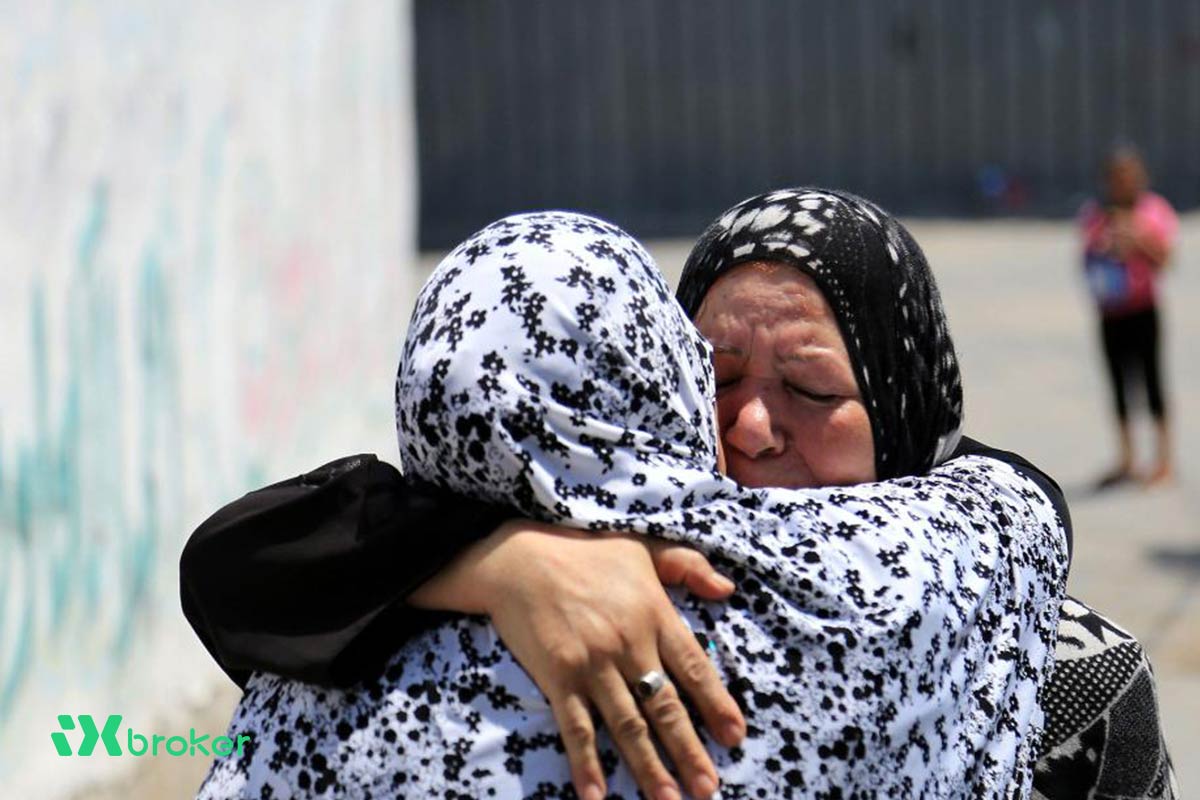
The fragile Gaza ceasefire held through its second day on Saturday, allowing tens of thousands of displaced Palestinians to return to their devastated neighborhoods as Israelis looked ahead to the expected release of remaining hostages on Monday.
“Gaza is completely destroyed. I have no idea where we should live or where to go,” said Mahmoud al-Shandoghli in Gaza City, watching bulldozers clear the wreckage of two years of war. Nearby, a boy scaled a shattered building to raise the Palestinian flag.
Israelis anticipate hostage release
In Tel Aviv, crowds gathered for what many hope will be the final weekly rally calling for the release of hostages. U.S. envoy Steve Witkoff and former White House adviser Jared Kushner addressed the crowd, drawing both cheers for U.S. President Donald Trump and boos for Israeli Prime Minister Benjamin Netanyahu.
“To the hostages themselves, our brothers and sisters, you are coming home,” Witkoff said. Israel’s military has confirmed that 48 hostages remain in Gaza, with roughly 20 believed to be alive. Their release is expected Monday.
“It’s a really happy time, but we know that there are going to be some incredibly difficult moments coming,” said attendee Yaniv Peretz, as people waved U.S. flags and took selfies in the crowd.
U.S. troops deployed to support ceasefire monitoring
Roughly 200 U.S. troops have arrived in Israel to monitor the ceasefire with Hamas. The soldiers will establish a coordination center to oversee humanitarian aid, logistics, and security assistance.
“This great effort will be achieved with no U.S. boots on the ground in Gaza,” said Adm. Brad Cooper, head of U.S. Central Command. According to Israeli officials, Witkoff, Kushner, and Cooper met with U.S. and Israeli military leaders in Gaza on Saturday to discuss next steps.
Aid agencies prepare to expand food distribution
Humanitarian groups urged Israel to reopen more border crossings to allow food into Gaza, where the U.N. has warned of famine conditions. A U.N. official confirmed that Israel has approved expanded aid deliveries starting Sunday.
The World Food Program said it is ready to restore 145 food distribution points across Gaza, up from just four operating under the U.S.- and Israel-backed Gaza Humanitarian Foundation since May. Before the March blockade, there were 400 U.N.-supported food sites.
COGAT, the Israeli military body overseeing aid, said over 500 trucks entered Gaza on Friday, though several crossings remain closed. Around 170,000 metric tons of food aid are waiting in neighboring countries for clearance.
Israel has also pledged to release 250 Palestinian prisoners serving sentences and about 1,700 detainees held without charge since the war began. The Israel Prison Service confirmed that transfers to deportation facilities have begun.
Questions over Gaza’s political future
Key uncertainties remain over who will govern Gaza after Israel’s gradual troop withdrawal and whether Hamas will disarm, as required under the ceasefire agreement.
Netanyahu, who ended the previous truce unilaterally in March, warned that Israel would resume its offensive if Hamas fails to surrender its weapons. “If it’s achieved the easy way, so be it. If not, it will be achieved the hard way,” he said Friday.
The U.N. estimates that more than 75% of Gaza’s buildings have been destroyed—an amount of debris equivalent to 25 Eiffel Towers, much of it toxic. As recovery efforts continue, officials expect the death toll to rise as more bodies are found beneath the rubble.
New security framework under discussion
Trump’s 20-point peace framework calls for Israel to maintain a long-term military presence along Gaza’s border, while an international force composed primarily of Arab and Muslim troops would oversee internal security.
Egyptian President Abdel-Fattah el-Sissi has urged the U.N. Security Council to authorize such a force. The Israeli military said it will continue to operate defensively from about half of Gaza while withdrawing to agreed lines.
Witkoff told Israeli officials that the U.S. will establish a coordination center in Israel to manage Gaza-related issues until a permanent governing body is established, according to a meeting summary obtained by the Associated Press.
A war’s staggering toll
The war began on Oct. 7, 2023, when Hamas-led militants attacked Israel, killing around 1,200 people and taking 250 hostages. In Israel’s subsequent military campaign, more than 67,000 Palestinians have been killed, according to Gaza’s Health Ministry. About half of those killed were women and children, the ministry said.
The conflict has reshaped the region, sparking global protests, destabilizing neighboring countries, and leading to international accusations of genocide—claims Israel firmly denies.