iXbroker News | July 2025
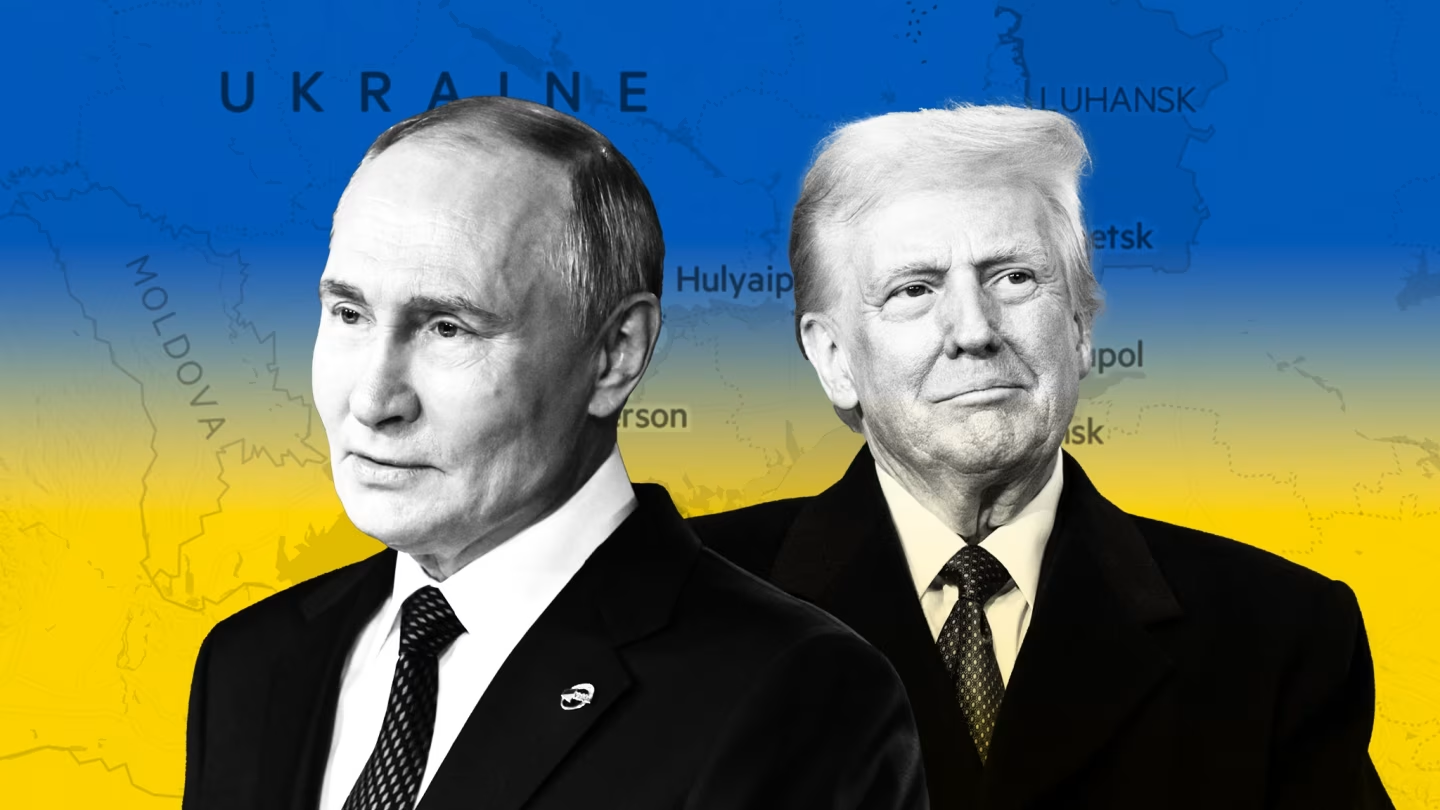
In a bold new twist on global trade dynamics, US President Donald Trump has announced his willingness to pursue fresh trade agreements with Russia—but only if the Kremlin ends its ongoing war in Ukraine. Speaking alongside the UK’s Prime Minister Keir Starmer at Scotland’s famed Turnberry resort, Trump outlined a vision of economic collaboration grounded in strict conditions for peace, setting the stage for high-stakes negotiations with significant repercussions for global financial markets.
A Shift from Confrontation to Conditional Engagement
During the summit, Trump emphasized the potential for substantial US-Russia trade, particularly in the field of rare earth minerals—a key commodity in today’s technology-driven economy. “I envision a lot of trade with Russia. They have a lot of valuable things. When you talk about rare earth, serious rare earth, they have just about every form you can have,” Trump remarked.
However, the President’s remarks came with a clear ultimatum: the US will only move forward if President Putin agrees to withdraw from Ukraine and declare peace. If Moscow fails to comply within the next 10–12 days, Trump warned of the imposition of secondary sanctions on Russia—a threat that could dramatically escalate existing economic pressures.
Rare Earth Minerals: The Strategic Prize
Rare earth minerals are vital for the production of semiconductors, batteries, advanced weaponry, and countless electronic devices. Russia’s vast deposits have grown in strategic importance as global supply chains tighten and Western nations seek to reduce dependence on other major suppliers like China.
By linking US trade opportunities to Russia’s willingness to withdraw from Ukraine, Trump is leveraging both economic incentives and punitive threats to influence Moscow’s geopolitical strategy. The move reflects a complex calculus: boosting US access to critical raw materials while maintaining a tough stance against continued aggression in Eastern Europe.
A High-Stakes Game for Europe and Beyond
Europe continues to bear the brunt of disruptions in Russian energy supplies. With Russian crude oil redirected through alternate channels and restrictive sanctions still in place, European economies face elevated energy costs and ongoing market uncertainty.
Should Trump’s peace condition succeed, it could rapidly thaw the icy economic relations between Russia and the West, unleashing new trade flows and potentially stabilizing commodity prices. Conversely, the failure to reach a ceasefire may trigger further sanctions, increasing global market volatility and deepening divides across international finance.
Humanitarian and Diplomatic Crossroads
While Trump pushed for economic leverage, UK Prime Minister Keir Starmer foregrounded humanitarian concerns, especially with regard to the conflict in Gaza. Their discussion encompassed not only Ukraine but also Chinese trade policy and Swedish tariffs, reflecting the interconnected nature of today’s geoeconomic landscape.
The Trump administration’s unique blend of commercial pragmatism and geopolitical hardball is now front and center. Whether this approach will deliver meaningful change—or simply intensify global tensions—remains to be seen. What is clear is that the next two weeks will be critical for both diplomacy and the markets.
iXDeep: Market Analysis—Implications for Forex & Crypto
Forex Markets:
Trump’s overture to Russia, if matched by a genuine policy shift from Moscow, would send ripples through currency markets. A peace declaration and renewed trade could strengthen the euro and emerging-market currencies tied to Eurasian trade, while reducing safe-haven demand for the USD, CHF, and JPY.
On the other hand, new secondary sanctions before mid-August would elevate volatility, push traders towards traditional safety nets, and potentially weaken the euro and Russian ruble. Volatility around the Russian ruble and euro-dollar crosses is expected to increase given the binary outcome ahead.
Cryptocurrencies:
Crypto markets thrive on macroeconomic and geopolitical catalysts. The potential easing of US-Russia tensions may dampen some of the “risk-off” impetus driving investments in Bitcoin and other digital assets, but it could also unlock new flows into Russian-linked cryptos and blockchain projects if sanctions are lifted.
Conversely, renewed sanctions or continued stalemate would likely fuel further hedging activity in major cryptocurrencies, as investors seek alternatives outside the traditional banking system. The next two weeks will be closely watched by crypto traders for abrupt shifts in sentiment and liquidity.