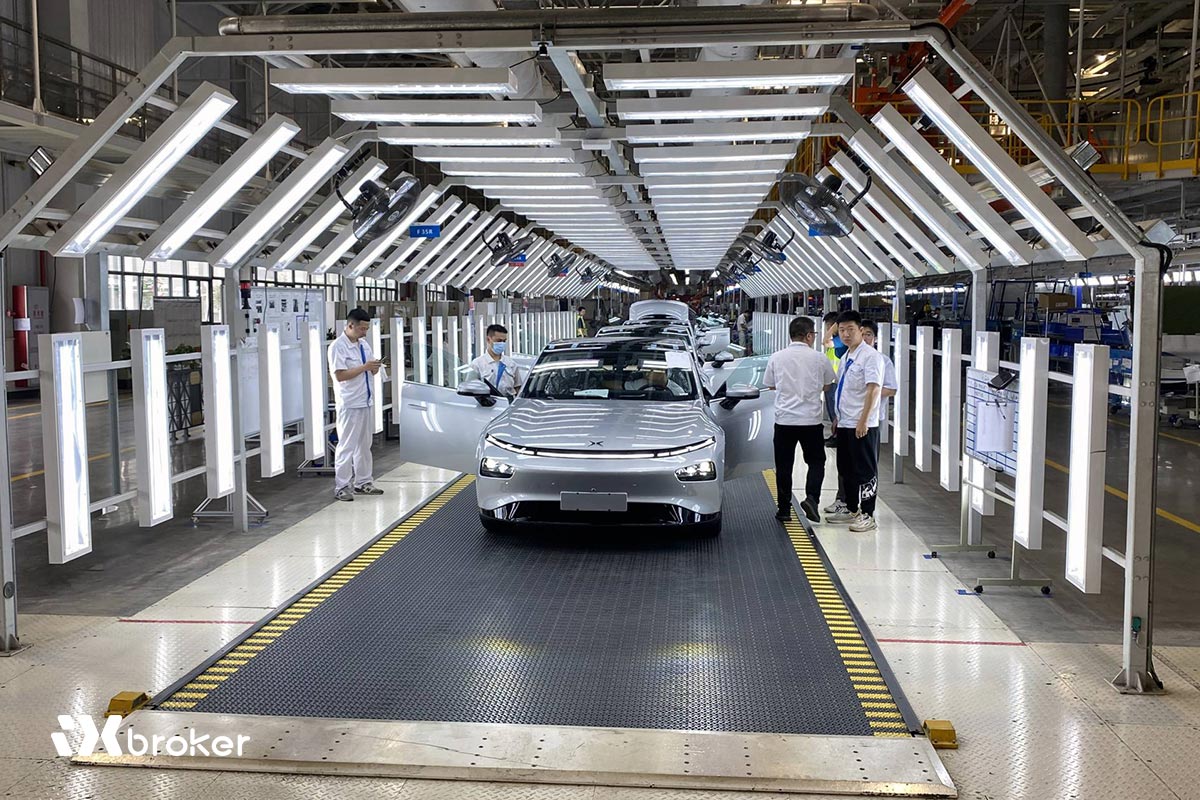
The scale and speed of China’s electric vehicle (EV) transformation has stunned the global auto industry, leaving rivals scrambling to catch up. Analysts warn that this momentum shows little sign of slowing, with China’s automakers increasingly reshaping competition far beyond their domestic market.
From underdog to market leader
In 2011, Tesla CEO Elon Musk dismissed BYD during a Bloomberg interview, questioning both the company’s design and technology. Fourteen years later, BYD has overtaken Tesla to become the world’s largest EV manufacturer by revenue, highlighting how dramatically the industry has shifted.
BYD is not alone. Startups such as Nio and Li Auto, alongside established players like Geely and SAIC Motor, have risen quickly in China’s EV ecosystem. Battery giant CATL has also played a pivotal role, cementing China’s dominance across the EV supply chain.
Export boom and global competition
With its domestic market highly saturated, China has turned outward. In 2023, the country surpassed Japan as the world’s largest vehicle exporter, selling 31.4 million units domestically and sending millions more abroad. EVs accounted for roughly 41% of total production.
Government subsidies, tax incentives, labor cost advantages, a weaker yuan, and a robust battery supply chain have all helped fuel this expansion. By 2030, analysts expect China to manufacture 36 million vehicles annually, with as many as 9 million units exported—up sharply from just 1 million in 2020.
“BYD alone was growing about one million units per year for three years straight,” noted Henner Lehne of S&P Global Mobility. “The competition is not only staying in China.”
Regulatory backlash in the west
The rapid rise has not gone unnoticed in Western markets. Both the U.S. and European Union have imposed tariffs on Chinese-made EVs, citing anti-competitive practices and risks to domestic industries.
Despite these measures, Chinese automakers continue to expand. In the U.K., Chinese-owned brands accounted for around 10% of new car sales in June 2025. In Norway, one of the most EV-friendly markets in Europe, Chinese manufacturers have captured a similar market share within just a few years.
Pressure on global automakers
Michael Dunne, CEO of Dunne Insights, argues that China’s auto dominance could mirror its track record in solar panels, shipbuilding, drones, and steel. He predicts that by 2030, four out of every ten cars built worldwide will come from China.
Countries with smaller auto industries, such as Thailand, South Africa, and Spain, are already feeling the strain from low-cost Chinese imports. Analysts also expect a coming shake-out within China, as intense competition squeezes weaker startups that struggle to reach profitability.
Europe’s strategic response
Sigrid de Vries, director general of the European Automobile Manufacturers’ Association (ACEA), acknowledges China as a “fierce competitor” but insists Europe’s auto sector has the capability to fight back. ACEA, representing major brands including Volkswagen, BMW, Renault, Stellantis, and Volvo, has urged the EU to create a more favorable regulatory environment for local players.
“We have to realize that some of that leveling of the ground, speaking for the EU, could be realized on their own terms,” de Vries said. “It’s the regulatory framework—driving cost and stifling innovation—that must change if Europe wants to stay competitive.”