Prolonged economic uncertainty delays a long-anticipated rebound in the U.S. truckload freight market as demand and capacity remain misaligned.
Despite early signs of a rebound, the U.S. truckload freight market continues to grapple with economic headwinds. Volatility in demand, lingering overcapacity, and fluctuating import patterns are pushing the expected market breakout further down the road.
Uncertainty Delays Market Correction
The U.S. truckload sector, a core indicator of domestic economic health, remains mired in one of its lengthiest downturns since the industry’s deregulation era. Despite early signals suggesting a shift toward recovery, persistent economic uncertainty has disrupted momentum, extending the timeline for a market breakout.
Recent trends in the Outbound Tender Reject Index (OTRI) and the National Truckload Index (NTIL) — which excludes fuel costs — have painted a complex picture. Over the past two years, both indices have shown an upward trajectory characterized by increasing volatility. However, in the first five months of 2025, these metrics have stagnated, reflecting a broader deceleration in market recovery.
Demand Lags Behind Capacity
Truckload demand is currently down by approximately 30% from its pandemic-era peaks — a period marked by unsustainably high shipping volumes. While that surge in demand was temporary, it lasted long enough to inflate market capacity to unsupportable levels.
Between June 2020 and October 2022, the number of active truckload operating authorities surged by nearly 48%. Since then, the figure has receded by only 12%, signaling a sluggish correction in available capacity. This lag can partly be attributed to the slow pace of data reporting by the Federal Motor Carrier Safety Administration (FMCSA), which can take up to two years to deregister inactive authorities. More refined datasets, such as those from Carrier Details, suggest a one-year lag — still insufficient for real-time analysis.
It’s crucial to note that not all authorities represent the same operational scale. Some may account for a single vehicle, while others cover fleets of hundreds or thousands. As a result, authority counts alone do not offer a complete view of capacity.
Tender Rejections Reflect Market Balance
In the current climate, tender rejections remain one of the most reliable indicators of market equilibrium. Carriers generally only reject tenders when they have more profitable alternatives available, which makes a rising rejection rate a sign of tightening capacity.
After years of correction, the market appeared to near equilibrium at the close of 2024. During the holiday season, the OTRI climbed above 10% — a threshold not seen since 2021 — despite growing interest among shippers in intermodal transport for longer hauls. This shift was driven in part by strategic inventory pull-forwards, which gave shippers greater scheduling flexibility.
Trade Policy Adds to Volatility
Adding another layer of complexity is the ongoing trade conflict, which has significantly impacted freight patterns. A brief lull in tariff activity during April and early May was quickly followed by renewed tensions, leading to unpredictable changes in shipping behavior.
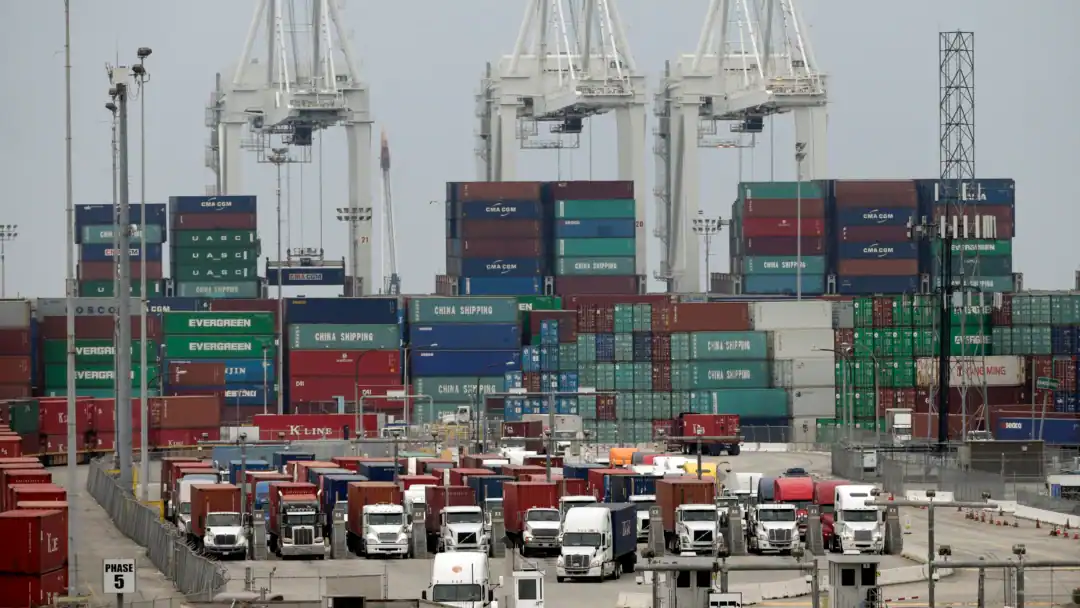
Last summer, import bookings data revealed a spike in container volumes bound for the U.S., indicating strong inbound demand. However, subsequent months have seen erratic swings, driven largely by trade policy uncertainty. While container import volumes can act as a leading indicator for trucking demand, their reliability diminishes during periods of volatility — a trend that has persisted since the COVID-19 pandemic.
Freight Sits Idle Amid Demand Concerns
Although import levels remain elevated, much of the incoming freight is being warehoused instead of immediately entering the domestic supply chain. This precautionary storage strategy reflects broader uncertainty around trade policies, consumer behavior, and inventory planning.
As a result, freight that might have otherwise fueled a truckload rebound is instead sitting idle — an issue that continues to suppress demand in the sector.
Conclusion
While the U.S. truckload market has the structural foundation for a breakout, ongoing macroeconomic instability and uneven policy signals are holding it back. Until greater clarity emerges on trade regulations and consumer trends, the sector is likely to continue its slow and uneven path toward recovery.