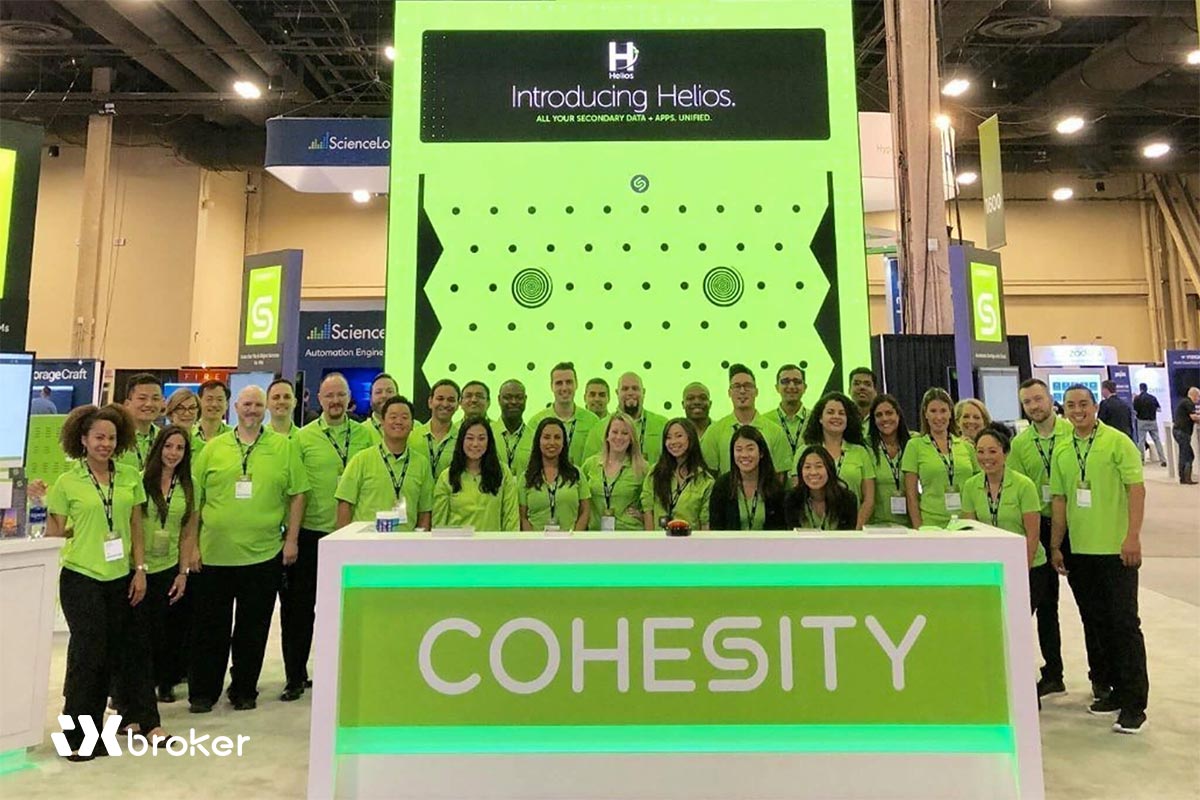
Data security firm Cohesity is preparing for a potential initial public offering (IPO) in 2026, with ambitions to match or surpass the $17-billion valuation of its publicly traded peer Rubrik.
The move would mark a significant milestone for Cohesity, which shelved its IPO plans in 2021 to execute a complex merger with Veritas’ data protection unit, making the company the largest player in data protection software. According to Cohesity CEO Sanjay Poonen, the deal — finalized in December 2024 — valued the combined entity at over $7 billion.
Poonen described the merger, which combined his fast-growing but unprofitable firm with the larger, profitable Veritas, as a risky yet strategic move. He explained, “In 2022, I made a calculation that if we went public then, we’d be a smaller fish among larger competitors like Rubrik and Commvault. That’s not what I wanted. We wanted to be the biggest fish, the market leader, before going public.”
The merger achieved that goal, with Cohesity’s market share growing from 5% to 19% following the acquisition of Veritas’ 14% stake, according to RBC Capital Markets.
IPO timeline and market prospects
Poonen revealed that Cohesity will be ready for an IPO as soon as it can provide investors with a full financial year’s results as a combined entity — likely by the fall of 2026. For now, Cohesity’s fiscal year ends in August, so the IPO could take place either in early or late 2026.
“If the business continues to perform well, 2026 will be the year,” Poonen said.
Rising tech IPOs
Cohesity’s planned IPO comes amid a broader rise in IPOs and mergers and acquisitions (M&A) activity among technology companies with valuations of $1 billion or more. According to Crunchbase, 25 unicorns have gone public or been acquired between May 2024 and May 2025, compared to 15 in the same period a year earlier.
However, analysts warn that ongoing macroeconomic factors, including fluctuations in U.S. tariff policy and uncertainty around interest rate changes, may create challenges for potential IPOs. Laia Marin i Sola, equity analyst at Barclays, noted, “While we’ve seen increased exit activity, macroeconomic volatility continues to weigh on IPO prospects.”
Valuation expectations and competition
Cohesity’s valuation expectations are benchmarked against Rubrik, which went public in April 2024 and currently boasts a market capitalization of approximately $17 billion. According to FactSet, Rubrik is trading at a 12.75 price-to-sales (P/Sales) multiple, while smaller peer Commvault is valued at 7.16 times P/Sales.
Poonen is confident that Cohesity’s larger size and post-merger performance will allow it to achieve a “comparable or superior valuation” in the public markets. He remarked, “We’re a bigger ship than them.”
An IPO at or above Rubrik’s valuation would represent a major windfall for Cohesity’s investors, including Sequoia Capital, Wing Venture Capital, and SoftBank, among others.
A focus on profitability and AI innovation
Despite ambitious IPO plans, Poonen emphasized that Cohesity’s focus remains on profitable growth, rather than the company’s stock price. “If we create long-term customer value and deliver profitable growth, valuation will follow,” he explained.
For the fiscal year ending July 2024, Cohesity reported annual recurring revenue (ARR) of $1.5 billion, with an adjusted profit margin of 28%. Before the merger, Cohesity was growing at nearly 30% year-over-year, while Veritas was expanding at around 5%. Analysts at RBC Capital Markets expect the combined entity to continue expanding in the mid-teens.
AI’s impact on cybersecurity
The rise of artificial intelligence (AI) has added complexity to the cybersecurity landscape. While AI has increased the potential for cyberattacks, it has also been deployed to improve defenses and reduce the cost of breaches. According to IBM’s Cost of a Data Breach Report 2025, the average cost of a breach declined by 9% to just over $4.4 million in 2024.
However, JPMorgan analyst Brian Essex cautioned that improper implementation of AI can introduce significant cybersecurity risks. “The use of AI has contributed to reduced breach costs, but improper AI use — especially shadow AI — has created new risks,” he said.
Cohesity’s AI-driven future
Cohesity has benefited from its partnership with AI chipmaker Nvidia, which has backed its AI-powered data search assistant, Gaia. This breakthrough product uses Retrieval-Augmented Generation (RAG) technology to turn backed-up data, once seen as “useless for AI,” into valuable insights.
Poonen credits Nvidia CEO Jensen Huang and Microsoft CEO Satya Nadella for inspiring the idea of applying AI search to backup data, noting that Nvidia’s quick decision to invest in Cohesity helped fuel the company’s growth.
“We were the first to implement RAG in backup,” Poonen said. “That’s what got Nvidia’s interest. They understood it immediately and put money behind us.”
For Poonen, the upcoming IPO will be an important milestone, but not the endgame. “It’s a significant achievement, but it’s not the destination. We’re focused on creating long-term value for customers and growing the business profitably.”