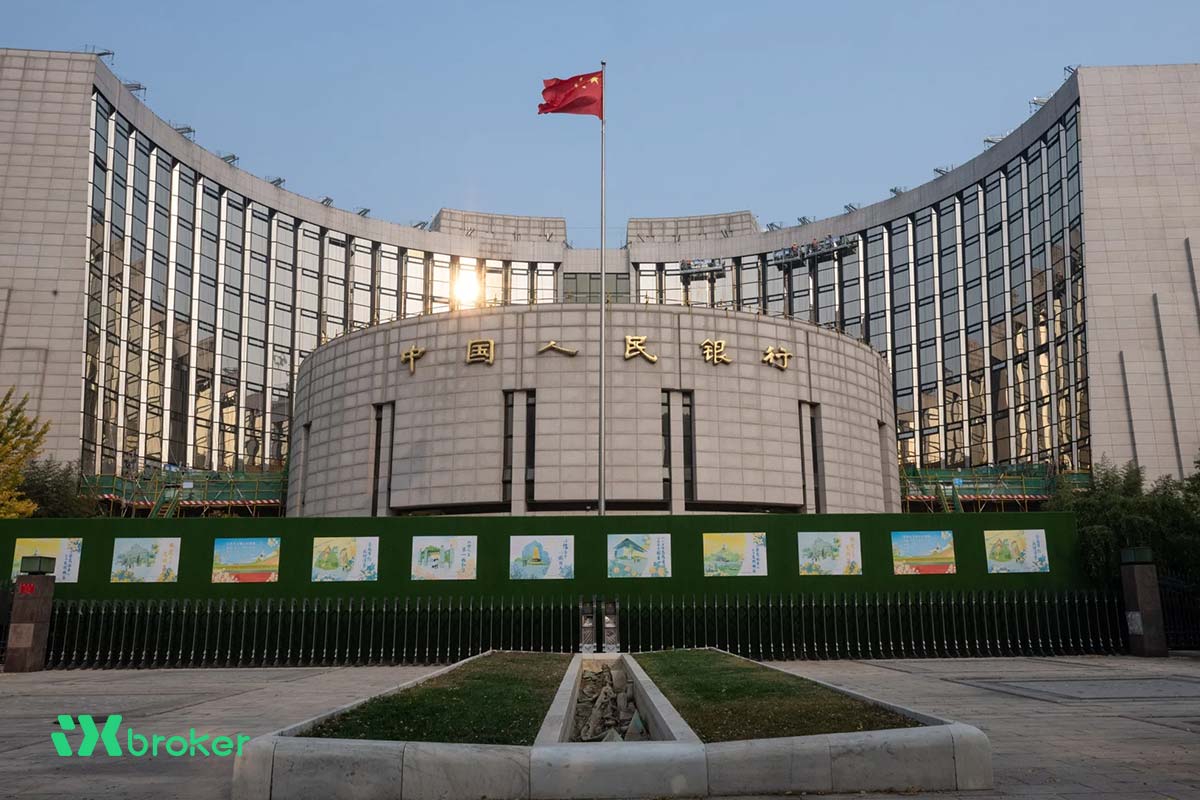
The yuan dipped against the U.S. dollar on Friday after China’s central bank signaled caution through its midpoint fixing, warning against a rapid appreciation as the currency hovered just below the psychologically significant 7-per-dollar mark.
PBOC takes steps to slow yuan gains
Major state-owned banks were seen actively buying dollars in the onshore spot market and recycling them into the swap market, a move interpreted as part of a broader effort to temper the yuan’s strength.
Before market open, the People’s Bank of China (PBOC) set the midpoint rate at 7.0358 per dollar — its strongest since September 2024 but 306 pips weaker than Reuters’ market estimate of 7.0052. The spot yuan is allowed to trade within a 2% band around this midpoint, and the gap between the official fixing and market estimate marked the largest weak-side deviation since 2022.
The pushback follows the offshore yuan briefly rising above the 7 level a day earlier, raising expectations that the onshore unit would continue strengthening. The last time the yuan reached this level was May 2023.
“The recent yuan appreciation stemmed from short-term positive factors rather than signaling the start of a new appreciation cycle,” said Guan Tao, global chief economist at Bank of China International Securities. “Overall, the renminbi exchange rate is unlikely to follow a one-sided trend next year and is more likely to fluctuate around the 7 mark.”
The onshore yuan traded at 7.0085 per dollar as of 0403 GMT, down 0.04% from the previous late-night close, while the offshore unit last fetched 7.0028.
Trade surplus supports currency
China’s resilient exports supported the yuan, with the trade surplus topping $1 trillion for the first 11 months of the year. Seasonal demand also contributed, as exporters convert more foreign currency into yuan for payments, administrative costs, and payroll toward year-end.
“Yuan appreciation against the dollar will have a limited impact on China’s exports in the short term,” said Luo Zhiheng, chief economist at Yuekai Securities. “It is necessary to guard against an excessively rapid and one-sided yuan appreciation to avoid shocks to business operations and financial markets.”
Moderate appreciation, Luo added, could improve the balance of payments, reduce trade frictions, and enhance the yuan’s international purchasing power.
Outlook for 2026
Global investment houses expect the yuan’s momentum to continue, testing the key 7 level. The PBOC reiterated its commitment to a stable yuan while strengthening foreign exchange market resilience and stabilizing market expectations.
“This pattern suggests the PBOC may favor a stronger yuan while avoiding overly rapid gains,” said Xinquan Chen, China economist at Goldman Sachs. Goldman maintains forecasts for the yuan to reach 6.95, 6.90, and 6.85 in three, six, and twelve months, respectively.
Ready to start trading Forex? Join iXBroker today and kick-start your trading journey now!