Bitcoin remains trapped in a tight $87,000–$89,000 range as traders exercise caution ahead of a major options expiry, with both spot and derivatives data signaling a lack of clear directional conviction.
At the time of writing, Bitcoin was trading around $88,326, up 0.6% over the past 24 hours. Over the past week, the cryptocurrency has oscillated between $86,979 and $90,064, with neither buyers nor sellers able to seize control. On a broader scale, Bitcoin closed 2025 about 6.7% lower and remains roughly 30% below its October peak of $126,080.
Market activity has slowed significantly. Spot trading volume over the past 24 hours fell to $21 billion, down more than 40% from the previous day. Futures trading shows a similar trend, with volume declining 39% to $32 billion, while open interest nudged up 0.6% to $55 billion. This combination suggests many traders are holding existing positions rather than initiating new ones, a typical pattern ahead of a major options expiry.
Options expiry limits near-term conviction
Bitcoin options with a notional value of $1.85 billion are set to expire at 08:00 UTC on Jan. 2, according to Deribit data. The put-to-call ratio stands at 0.48, and the max pain level is around $88,000. Ethereum options worth $390 million are also expiring, with a max pain level near $2,950.
Options give traders the right—but not the obligation—to buy or sell Bitcoin at a predetermined price before a specified date. Calls profit if prices rise, while puts gain when prices fall. As expiry approaches, many participants adjust or unwind positions, often resulting in muted price action in the short term.
Currently, data points to modest optimism but not enough momentum to push Bitcoin decisively above $88,000. Prices are gravitating near key strike levels, open interest remains stable, and trading activity is tapering. Such conditions typically produce choppy, sideways movement until expiry, after which the market may see increased volatility as positions are settled.
On-chain signals suggest late-cycle consolidation
On-chain metrics also reinforce a cautious stance. Analysis from CryptoQuant contributor Yonsei_dent shows that Bitcoin’s Supply in Profit—tracking the portion of circulating coins held at a gain—is at 68.85%. This level positions the market between clear bull and bear phases.
Historically, readings below 55% have signaled deeper bear markets, while levels above 80% corresponded with strong bull runs. Bitcoin slipped below 80% in October and has gradually declined since. Sustained activity near 70% could indicate the risk of a broader downturn, while a rebound above 75–80% would support renewed upside potential.
Technical analysis: consolidation dominates near-term outlook
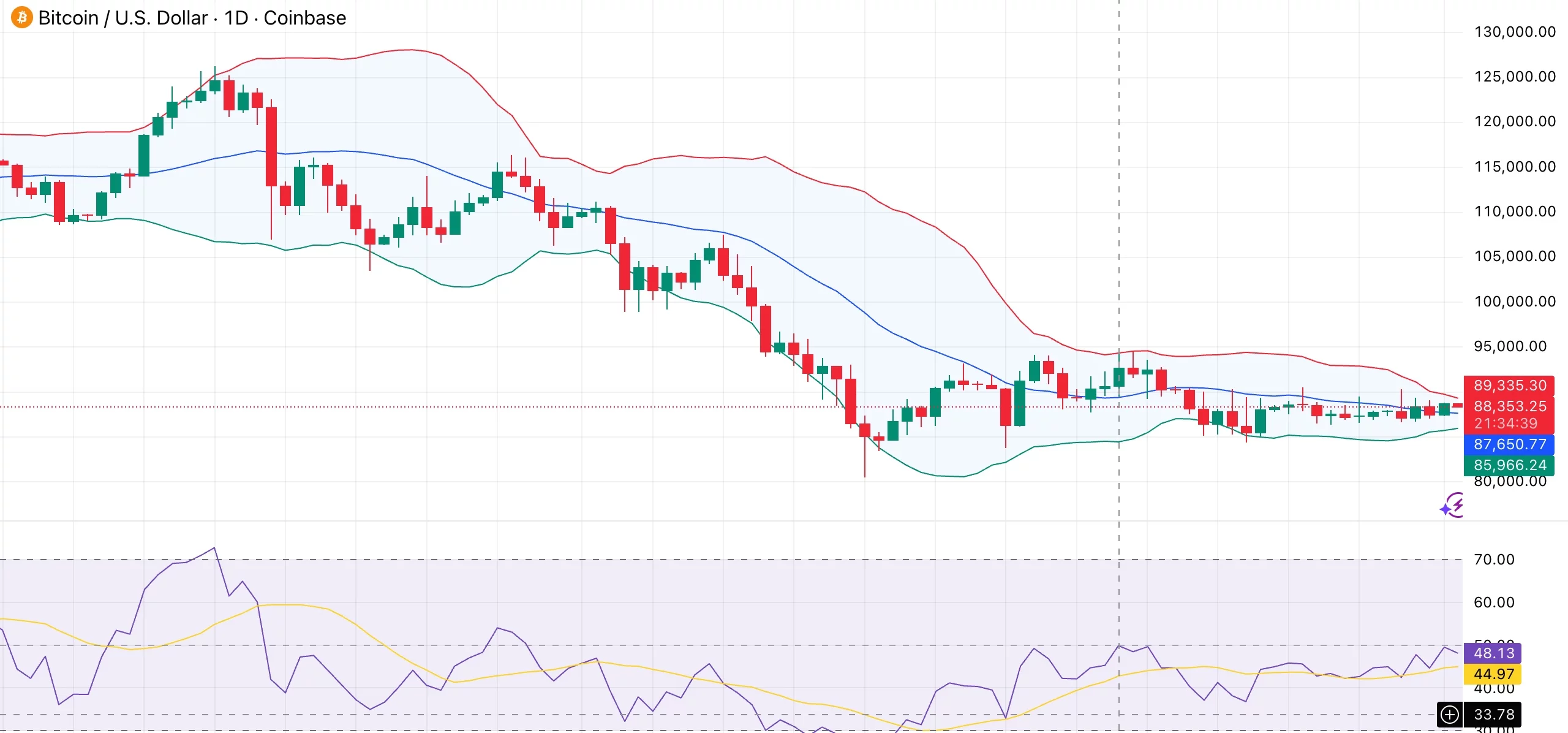
Bitcoin’s structure remains sideways to bearish. The overall trend shows lower highs and lower lows, although recent price action reflects tight consolidation rather than sharp declines.
Bollinger Bands have narrowed, signaling reduced volatility. Price is holding in the lower half of the bands, just below the middle line – a pattern that often precedes a more significant move, though the direction remains uncertain.
The relative strength index (RSI) sits near 48, indicating neutral momentum. Buyers have yet to assert strength after a recent oversold phase.
Support is established between $86,000 and $87,500, where price has bounced multiple times. Resistance ranges from $89,500 to $91,000, with a decisive daily close above this zone suggesting a potential recovery. Conversely, a break below support could reinstate downward pressure and refocus attention on the prevailing downtrend.
Ready to start trading Forex? Join iXBroker today and kick-start your trading journey now!