France is once again at the center of political and economic uncertainty after Prime Minister François Bayrou unexpectedly announced a confidence vote set for September 8. Business leaders caution that the move could push the euro zone’s second-largest economy back toward recession and weigh heavily on market sentiment.
Political gamble, market backlash
Bayrou’s surprise decision aims to preempt an opposition-led no-confidence motion over his planned €44 billion budget squeeze for 2026. Instead, the gamble appears to have backfired, as opposition parties immediately pledged to oust his minority government.
Financial markets reacted sharply, with French bonds sold off and the spread between French and Italian 10-year yields narrowing—a signal that investors see heightened fiscal and political risks in Paris.
Fragile growth, rising consumer anxiety
The French economy grew just 0.3% in Q2, driven almost entirely by household consumption. But business leaders warn that political instability could undermine this fragile momentum.
“Our morale is tied to the functioning of the state,” said Alexandre Bompard, CEO of Carrefour. “The more uncertainty we face, the more likely consumers are to delay spending, which puts the economy at recessionary risk.”
Patrick Martin, head of the Medef employers’ group, was even more blunt:
“Those who think they can play with politics are making us face an enormous economic risk.”
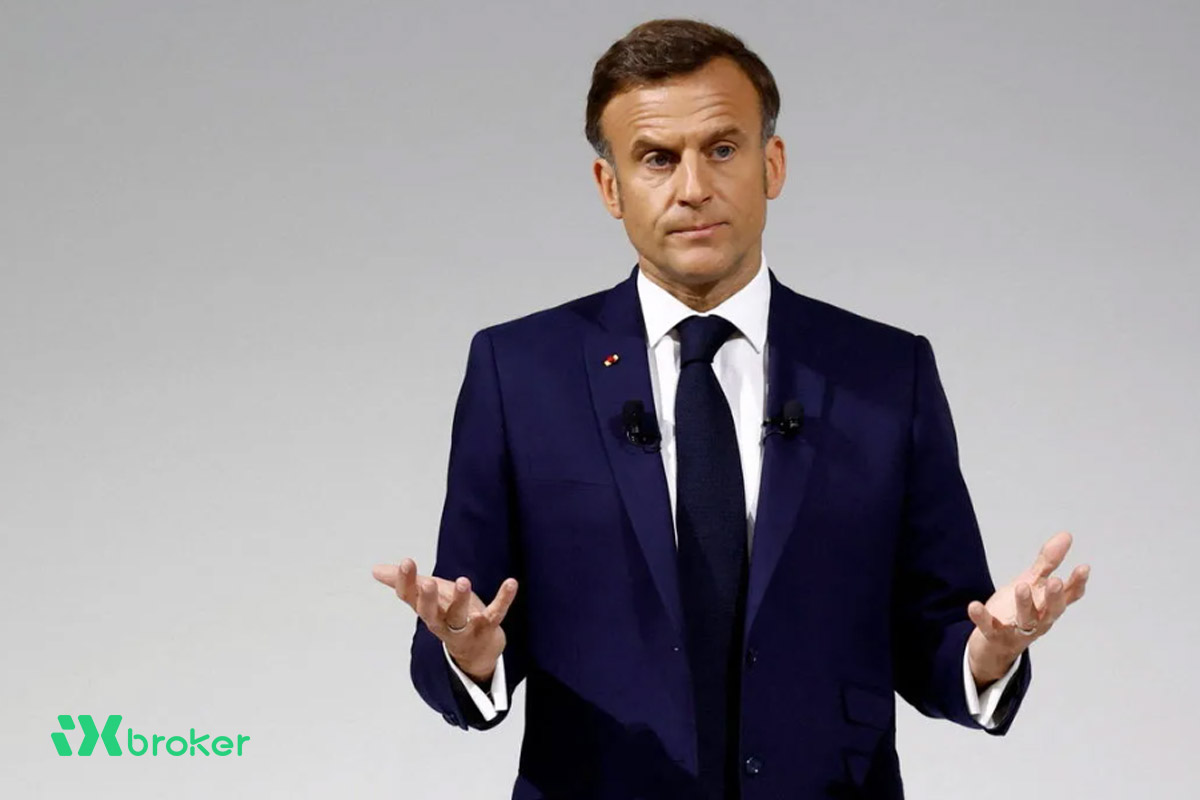
Rising pressure on macron
Opinion polls show between 56% and 69% of French citizens want fresh elections, reflecting deep dissatisfaction with the political status quo. Some surveys suggest that up to 67% would want President Emmanuel Macron to resign if Bayrou loses the vote.
Despite this, Macron has repeatedly ruled out resigning or dissolving parliament, though analysts expect he may consider appointing a new prime minister if Bayrou falls.
The political standoff comes as France’s public debt has climbed to 113.9% of GDP, far above EU limits. Bayrou’s austerity plan includes scrapping two public holidays and freezing most public spending—moves widely seen as politically toxic.
Forex and market implications
Analysts at Morgan Stanley stressed that either outcome—whether snap elections or a new prime minister—points to “a prolonged period of uncertainty” for France.
For currency traders, that uncertainty translates into potential volatility for the euro, particularly against the U.S. dollar. The EUR/USD pair is already under pressure amid concerns over slowing eurozone growth and persistent fiscal strains in France.
Upcoming street protests on September 10, just two days after the confidence vote, could add further downside risk for the euro if political instability intensifies.