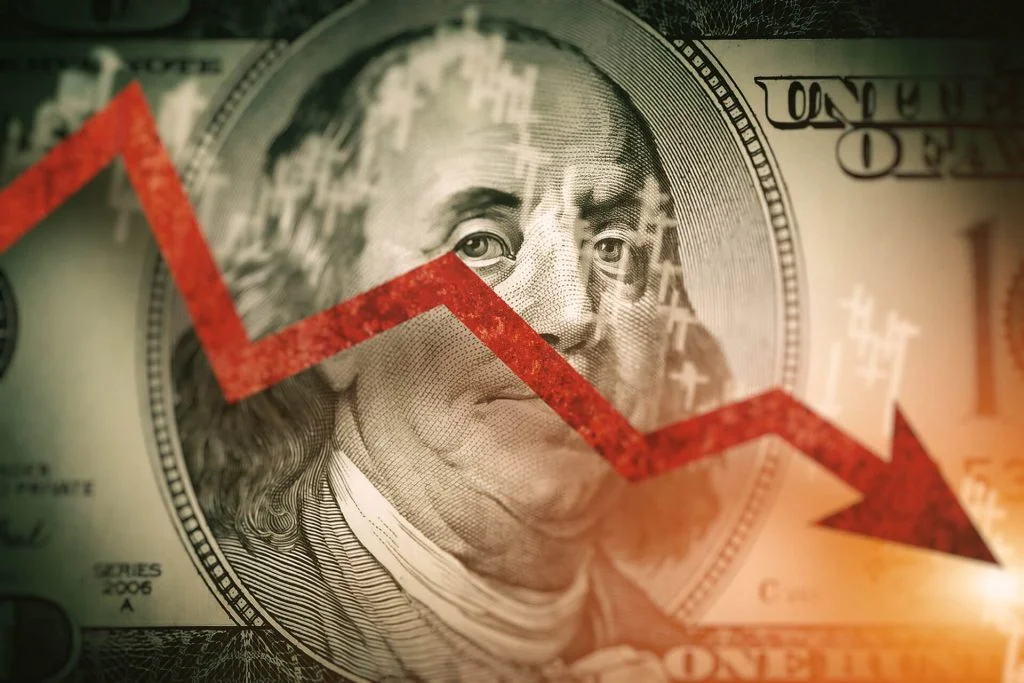
The sharp decline in the U.S. dollar in 2025 boosts multinational profits and strengthens the competitive edge of American exporters.
As the U.S. dollar experiences a significant drop in value throughout 2025, many American multinational companies are positioned to report stronger financial results compared to recent years. The weakening currency not only enhances the value of foreign revenues when converted into dollars but also increases the global competitiveness of U.S. exporters.
Unprecedented Decline in the U.S. Dollar
The U.S. Dollar Index, which tracks the performance of the greenback against a basket of six major currencies, has fallen by roughly 10% in 2025. A large portion of this decline occurred after President Donald Trump announced aggressive import tariffs on April 2, triggering investor concerns about U.S. trade stability. With the index averaging 99.74 in the second quarter—down 6.5% from Q1—this marks the steepest two-quarter drop in more than 30 years.
A Boost for Multinationals’ Bottom Line
The depreciation of the dollar offers tangible benefits to U.S. companies with significant exposure to foreign markets. When foreign earnings are converted to dollars at lower exchange rates, reported revenues and profits increase. Simultaneously, American exports become more competitively priced in global markets, expanding sales opportunities abroad.
Financial Impact of a Weaker Dollar
According to research firm Macro Hive, every 10% decline in the dollar can result in a roughly 2% positive earnings surprise at the S&P 500 level. This boost is particularly meaningful at a time when investors are increasingly concerned about the earnings impact of ongoing trade disputes and tariff policies.
Greg Boutle, Head of U.S. Equity and Derivative Strategy at BNP Paribas, stated:
“It’s a massive move in the dollar. We expect this to support earnings this quarter and potentially influence forward guidance as well.”
Renewed Competitive Advantage Amid Instability
In contrast to 2024—when a 7% rise in the dollar created headwinds for many U.S. firms—2025 has taken an unexpected turn. Patrick Kaser, Portfolio Manager at Brandywine Global, commented:
“Many companies started the year assuming currency pressure would continue, but that scenario has flipped. This shift could help neutralize some of the negative effects of tariffs.”
A Promising Outlook for Q2 2025 Earnings
With second-quarter earnings season now underway, analysts expect the dollar’s weakness to be reflected in corporate financials. Although earnings growth may decelerate compared to the first quarter, currency-related gains are likely to help balance out other economic pressures.
Technology firms, pharmaceutical giants, consumer goods producers, and automakers—especially those with significant global operations—stand to benefit the most. Conversely, companies focused primarily on the domestic U.S. market may see minimal impact.
Short-Term Advantage or Long-Term Warning?
While a weaker dollar presents a short-term advantage for exporters and global businesses, some economists warn about its broader implications. Concerns surrounding U.S. economic growth, rising debt levels, and capital outflows may undermine long-term confidence in dollar-denominated assets. Nevertheless, for now, the currency’s decline appears to be providing welcome relief in a complex trade environment.
Conclusion
At a time when U.S. investors and corporate leaders are navigating the uncertainties of shifting trade policy and economic volatility, the dollar’s sharp depreciation in 2025 has emerged as a strategic tailwind. Its effects—particularly evident in the second-quarter financial results—are expected to reinforce market sentiment and support investment momentum across global-facing sectors.