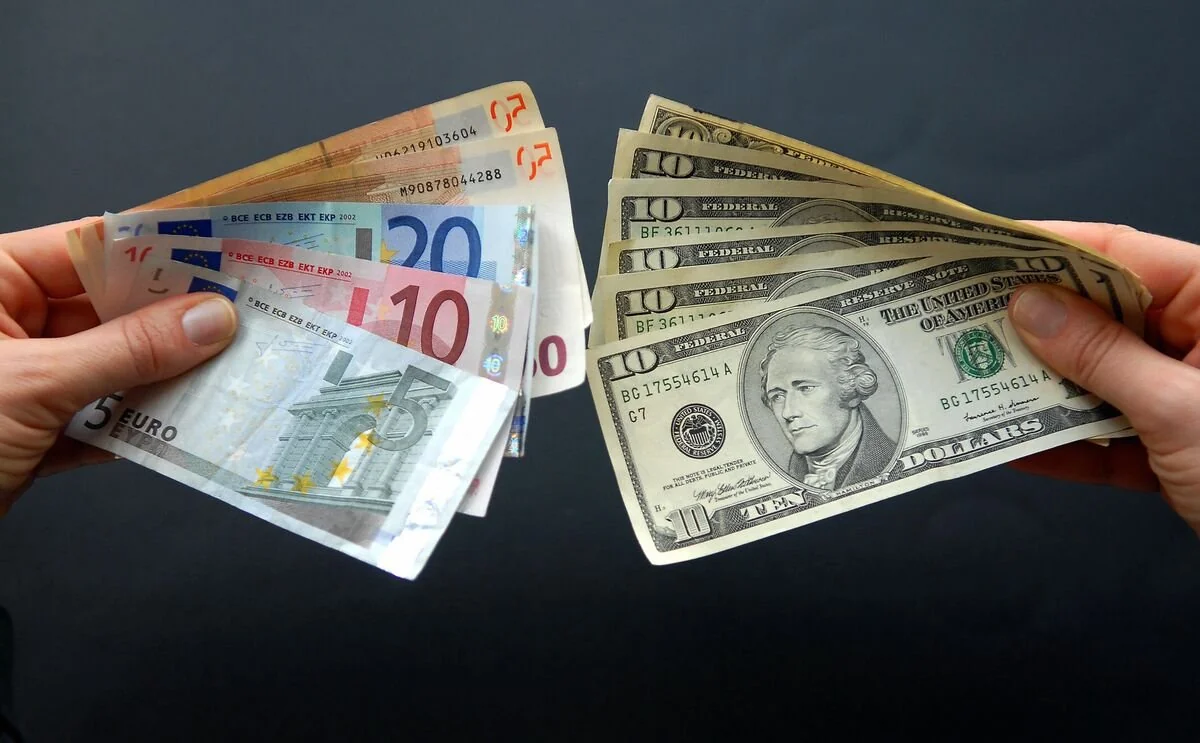
ECB’s Gabriel Makhlouf says euro still lacks financial foundation to replace the dollar as the world’s dominant reserve currency.
Gabriel Makhlouf, member of the European Central Bank’s Governing Council and Governor of the Central Bank of Ireland, stated at an economic conference in France that despite recent progress, the euro is still not ready to challenge the US dollar as the dominant global reserve currency. He emphasized the need for stronger fiscal unity, secure common assets, and a more integrated capital market across the EU.
Euro Has Yet to Reach Economic Maturity
In recent years, the idea of the euro replacing the US dollar as the world’s primary reserve currency has resurfaced frequently. However, Gabriel Makhlouf, a key policymaker within the eurozone, believes that such a shift is unlikely to occur in the near future. Speaking at the economic forum in Aix-en-Provence, France, he stated, “Frankly, Europe’s economic system is still not fully formed.”
His comments come amid speculation that the euro’s recent appreciation against the dollar could signal a larger structural change in the global financial system.
Lack of Safe Assets and a Unified Fiscal Structure
Makhlouf identified the absence of euro-denominated safe assets, comparable to US Treasury bonds, as a major structural weakness. While the US benefits from a robust and integrated capital market and a unified fiscal framework, the European Union lacks these fundamental elements.
He noted, “Europe needs a shared fiscal capacity to provide financial security across the bloc.” Without it, the euro remains structurally disadvantaged in its global role.
Euro’s Gains Reflect Dollar Weakness, Not Euro Strength
Although the euro has gained ground against the dollar in recent months, Makhlouf cautioned that this shift should not be misinterpreted as a sign of growing euro strength. He explained that the recent currency movement is largely due to investor concerns about the rule of law and political uncertainty in the United States.
“To suggest that this trend means the euro is ready to replace the dollar is far-fetched. The euro simply isn’t there yet,” he emphasized.
An Opportunity for Europe to Reposition
Despite these challenges, Makhlouf called on EU leaders to seize the current global uncertainty as a chance to strengthen the bloc’s strategic and economic position. He urged the removal of internal barriers within the single market, greater financial integration, and increased joint investment in pan-European projects.
“These opportunities to raise the EU’s global standing, strengthen its sovereignty, and increase its autonomy are critical—and must be acted upon,” he said.
Looking Ahead: A Difficult but Necessary Journey
Analysts agree that for the euro to assume a greater international role, the EU must implement major structural reforms. These include the establishment of a unified fiscal policy, issuance of common eurobonds, deeper capital market integration, and stronger budgetary coordination among member states.
In addition, bolstering global trust in the EU’s political and economic stability will be essential. Many experts view the euro’s expansion as not only an economic goal but a strategic necessity, especially as dependence on the US dollar can be seen as a vulnerability in today’s geopolitical landscape.
Conclusion: Euro on the Path, but Not at the Destination
In conclusion, while the euro holds long-term potential to become a global reserve currency, its current foundation is insufficient. Makhlouf’s remarks reflect a realistic understanding among European officials: achieving global currency status will require more than monetary policy—it demands a political and fiscal commitment to deeper integration.