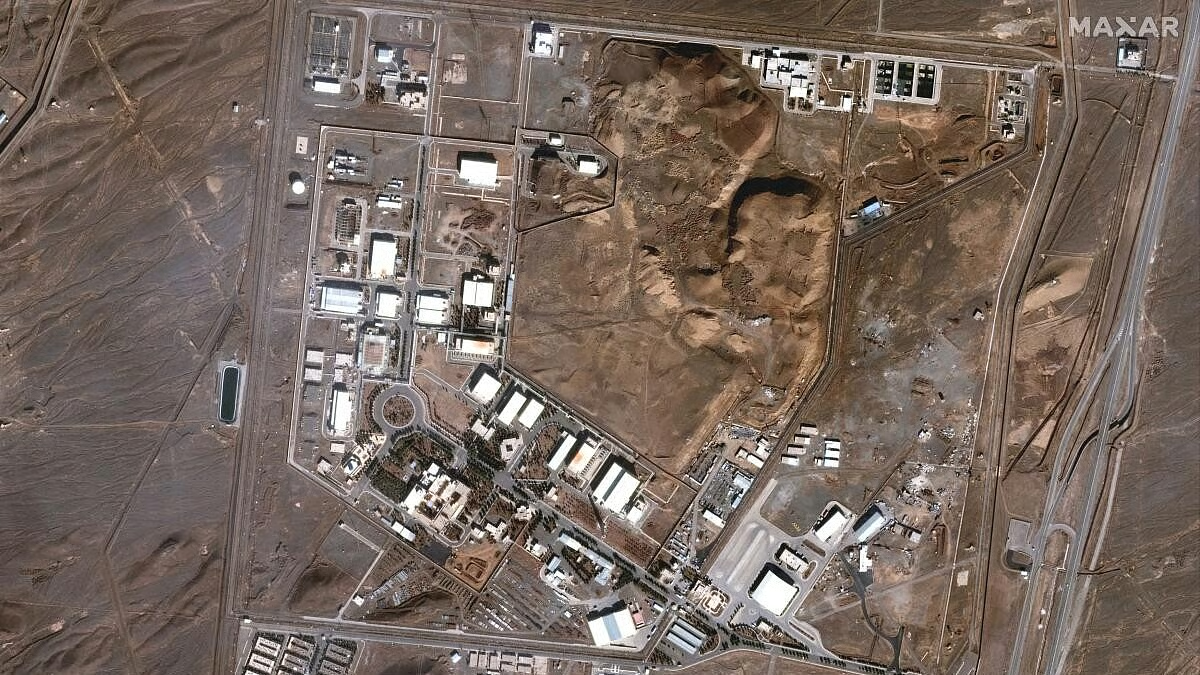
The International Atomic Energy Agency reports unchanged radiation levels at Natanz, confirming Israeli strikes have not penetrated its protective structures.
The International Atomic Energy Agency (IAEA) announced that radiation levels at Iran’s Natanz uranium enrichment site have remained stable, indicating that recent Israeli attacks have failed to penetrate the facility’s robust underground protective layers.
Comprehensive Report on the Status of Iran’s Natanz Nuclear Site Following Israeli Strikes
The Natanz uranium enrichment facility, one of Iran’s most sensitive nuclear sites, has recently been targeted by Israeli military operations. However, a new report from the International Atomic Energy Agency (IAEA) reveals that these strikes have not breached the site’s multilayered protective infrastructure, and no increase in radioactive emissions has been detected.
Emphasis on the Security of Iran’s Nuclear Facilities
Located approximately 300 kilometers south of Tehran, Natanz serves as the main hub for uranium enrichment and plays a critical role in Iran’s nuclear program. Iranian authorities informed the IAEA that radiation levels at the site have not risen, and no chemical or radiological contamination has leaked beyond the facility’s boundaries. This signifies the effectiveness of the extensive security and safety measures protecting the site.
In addition to Natanz, other Iranian nuclear installations—including the Bushehr nuclear power plant on the Persian Gulf coast, the Fordow enrichment site, and the uranium conversion facility—have so far not been targeted. Rafael Mariano Grossi, IAEA Director General, confirmed these sites remain intact, with Fordow located about 200 kilometers south of Tehran and the conversion plant roughly 400 kilometers from the capital.
International Reactions and Concerns
While Israel has escalated its attacks on Iran’s nuclear facilities, Israeli Prime Minister Benjamin Netanyahu stated that these operations will continue until the nuclear threat from Iran is fully eliminated. The Israeli Air Force issued a statement saying the strike on Natanz targeted a multi-level underground chamber housing centrifuges, electrical rooms, and vital infrastructure.
Nevertheless, the protective infrastructure at Natanz is highly fortified. The facility lies over 40 meters underground, encased within a steel and concrete shell approximately eight meters thick. Similarly, the Fordow site is built into a mountain, with its enrichment hall situated half a kilometer below the surface.
Addressing the IAEA Board of Governors in Vienna, Rafael Grossi expressed deep concern over Israel’s military actions, deeming them violations of international law and calling for utmost restraint from all parties. He stressed that nuclear facilities must never be attacked, given the significant human and environmental risks involved, as well as the potential to destabilize regional and international peace.
The Importance of Nuclear Security in the Region
These reports and developments indicate that despite heightened military and political tensions, Iran has managed to safeguard its critical nuclear infrastructure through advanced technologies and robust protective measures. Nonetheless, international warnings regarding the dangers of military assaults on nuclear facilities underscore the need for diplomacy and restraint.
Experts caution that any large-scale military confrontation could have severe consequences for nuclear security and political stability in the Middle East. Therefore, international organizations and governments must endeavor to find peaceful, diplomatic solutions to address conflicts and tensions in the region.