Trump hints at direct talks with Xi to resolve China’s delay in rare earth export licenses, accusing Beijing of breaching the trade deal.
U.S. President Donald Trump is once again turning to personal diplomacy to address one of the most sensitive trade disputes between Washington and Beijing—a dispute ignited by China’s sluggish issuance of export licenses for critical rare earth elements, threatening the fragile truce reached between the two powers just weeks ago.
Trade Tensions Reignite Over Rare Earth Exports
Recent delays by Beijing in approving export licenses for rare earth elements have rekindled trade tensions between the world’s two largest economies. This latest strain comes despite the ink still being fresh on a temporary tariff ceasefire signed earlier this month.
Trump Accuses China of Breaching the Deal
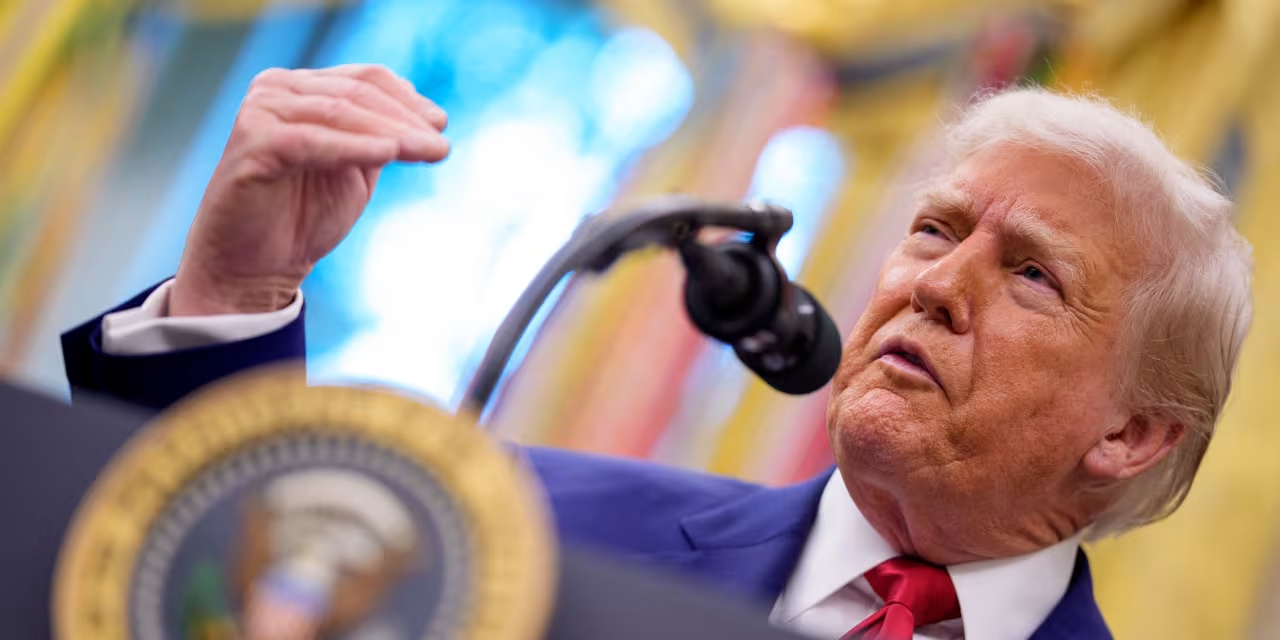
Responding to the export slowdown, President Trump criticized China’s actions and said he may soon speak directly with Chinese President Xi Jinping.
“They violated a big part of the agreement we made,” Trump said at the White House on Friday. “But I’m sure that I’ll speak to President Xi, and hopefully we’ll work that out.”
Uncertainty Surrounds Potential Leader-Level Talks
While Trump signaled optimism, there is no confirmation from Beijing on whether President Xi is open to a direct conversation. The last known phone call between the two leaders occurred before Trump’s inauguration earlier this year.
U.S. Trade Representative Calls Out China’s Delays
U.S. Trade Representative Jamieson Greer was more direct in his criticism. He accused China of failing to comply with the Geneva trade agreement and said the flow of critical minerals—particularly rare earth magnets—had not resumed as agreed.
“China continues to slow down and choke off things like critical minerals and rare earth magnets,” Greer stated.
Strategic Role of Rare Earth Elements in Global Industry
Rare earth elements are a group of critical minerals essential for manufacturing high-tech products, including smartphones, electric vehicles, renewable energy systems, and military hardware. China dominates global production and export of these materials, making any disruption a major concern for global supply chains.
China: U.S. Must End Discriminatory Export Controls
In response, Liu Pengyu, spokesperson for the Chinese Embassy in Washington, emphasized that Beijing and Washington have remained in communication since the Geneva talks. However, he criticized recent U.S. actions, particularly regarding semiconductor-related export controls.
“China once again urges the U.S. to correct its erroneous actions, cease discriminatory restrictions against China, and uphold the consensus reached at the high-level talks in Geneva,” Liu said.
Market Reacts to Latest Trade Friction
The financial markets reacted swiftly to the renewed tension. The S&P 500, which was on track for its best May since 1990, fell by as much as 1.2% before recovering most of the losses later in the session.
Another Blow to Trump’s Trade Agenda
This rare earth dispute is not the only challenge confronting Trump’s trade policy. Earlier this week, a federal court ruling temporarily halted most of the tariffs imposed under his administration. While an appeals court has paused that decision to hear arguments, a final ruling could block Trump’s duties altogether.
Conclusion: Personal Diplomacy at the Forefront Again
As U.S.-China trade relations grow increasingly complex, the fate of one of the world’s most strategic economic negotiations may once again depend on a single phone call between two presidents. Despite mounting challenges, the White House remains hopeful that personal diplomacy can de-escalate the crisis and revive the spirit of cooperation.