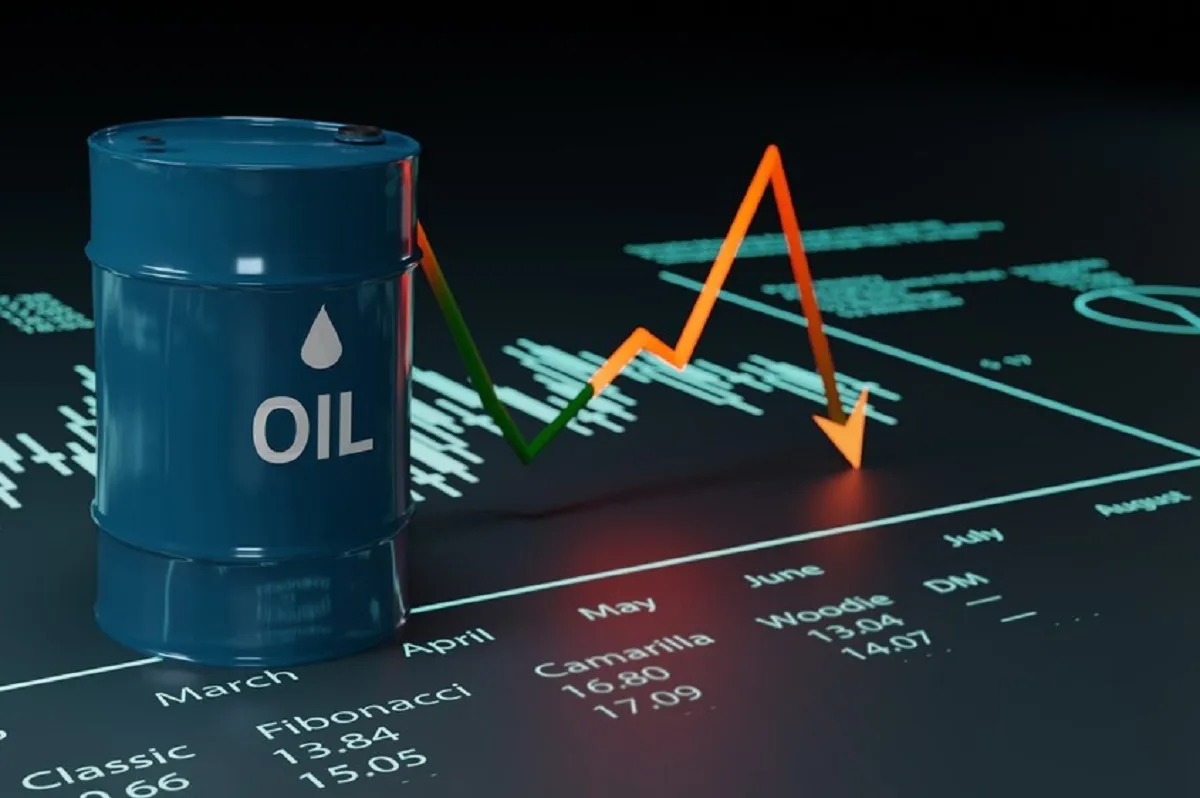
Oil price forecasts for 2025 have been lowered due to increased OPEC+ output and ongoing trade uncertainties. The oil market remains volatile amid production decisions and global geopolitical tensions.
Rising oil supply from OPEC+ member countries alongside persistent concerns over the impact of trade tensions on fuel demand have led analysts to reduce their oil price forecasts for the third consecutive month. Meanwhile, speculation about OPEC+ production policies and the global economic outlook has placed the oil market in a state of instability.
Reduced Oil Price Forecasts for 2025
The oil market has faced multiple challenges this year, prompting analysts to revise their price forecasts downward for the third month in a row. Notably, increased oil production by OPEC+ countries and concerns over the effects of trade disputes among major economies on global fuel demand have exerted downward pressure on prices.
According to a Reuters survey of 40 economists and oil market analysts, the average Brent crude oil price for 2025 is now forecast at $66.98 per barrel, a significant decline from April’s forecast of $68.98. Meanwhile, U.S. crude oil prices are expected to average $63.35 per barrel, down from $65.08 last month. It is worth noting that so far this year, Brent and U.S. crude have averaged $71.08 and $67.56 respectively.
Impact of Trade Tensions and OPEC+ Policies on the Oil Market
Although trade tensions between the United States and some key partners have somewhat eased, concerns about the long-term impact of trade disputes on oil demand persist. Tobias Keller, senior analyst at UniCredit Bank, notes, “Trade disputes will remain a key factor suppressing demand, while OPEC+ production decisions will have a significant impact on prices from the supply side.”
On the other hand, OPEC+, comprising the world’s largest oil producers, has adopted a policy of gradually increasing production in 2025. Since early this year, the group has been rolling back previous production cuts and approved an increase of 411,000 barrels per day (bpd) for May and June. Sources familiar with the matter told Reuters that a similar increase might be approved for July during an upcoming meeting.
Challenges in Implementing OPEC+ Decisions
However, ensuring full compliance with these production agreements remains challenging. Suvro Sarkar, lead energy analyst at DBS Bank, emphasizes that “the production increases seem more like a punitive measure against members failing to meet their quotas rather than an effort to support prices at a specific level.” He also points out the difficulty of enforcement in countries like Kazakhstan, which has a history of non-compliance.
Global Oil Demand Outlook
On the demand side, many analysts forecast that global oil demand will grow by an average of 775,000 barrels per day in 2025, slightly higher than the 740,000 bpd growth forecast by the International Energy Agency (IEA).
Despite this, economic risks remain significant constraints on demand growth. Norbert Ruecker, head of economics and next-generation research at Julius Baer Bank, explains that technological advances in fuel efficiency in the U.S. and widespread adoption of electric vehicles in China, along with global economic uncertainties, have limited demand growth. He stresses that “most of the demand growth is coming from resource-rich countries and less from major consumer markets.”
Geopolitical Risks and the Impact of the Russia-Ukraine War
The ongoing Russia-Ukraine war remains a major geopolitical risk factor for the oil market. Although much of this uncertainty has been priced into current prices, any sudden changes in the conflict or sanctions could impact supply and prices. Sarkar notes, “Efforts toward de-escalation or a potential lifting of Russian oil sanctions could put further downward pressure on prices.”
Conclusion: An Uncertain Future for the Oil Market
Given the current complex mix of economic, political, and production-related factors, the oil market remains highly sensitive. Future OPEC+ decisions on production levels, geopolitical developments, and global economic conditions will play a decisive role in shaping oil price trends. Analysts caution that market participants should be prepared for significant price volatility and continued uncertainty.