A $9.3 billion climate finance deal aimed at helping South Africa transition to cleaner energy sources will proceed despite the withdrawal of the United States, according to the UK’s climate envoy, Rachel Kyte. While the US was initially set to contribute approximately $1 billion in commercial loans to the Just Energy Transition Partnership (JETP), its departure has not deterred other partners, including France, Germany, the European Union, the UK, the Netherlands, and Denmark, from remaining committed to the agreement.
The US Withdrawal and Its Implications
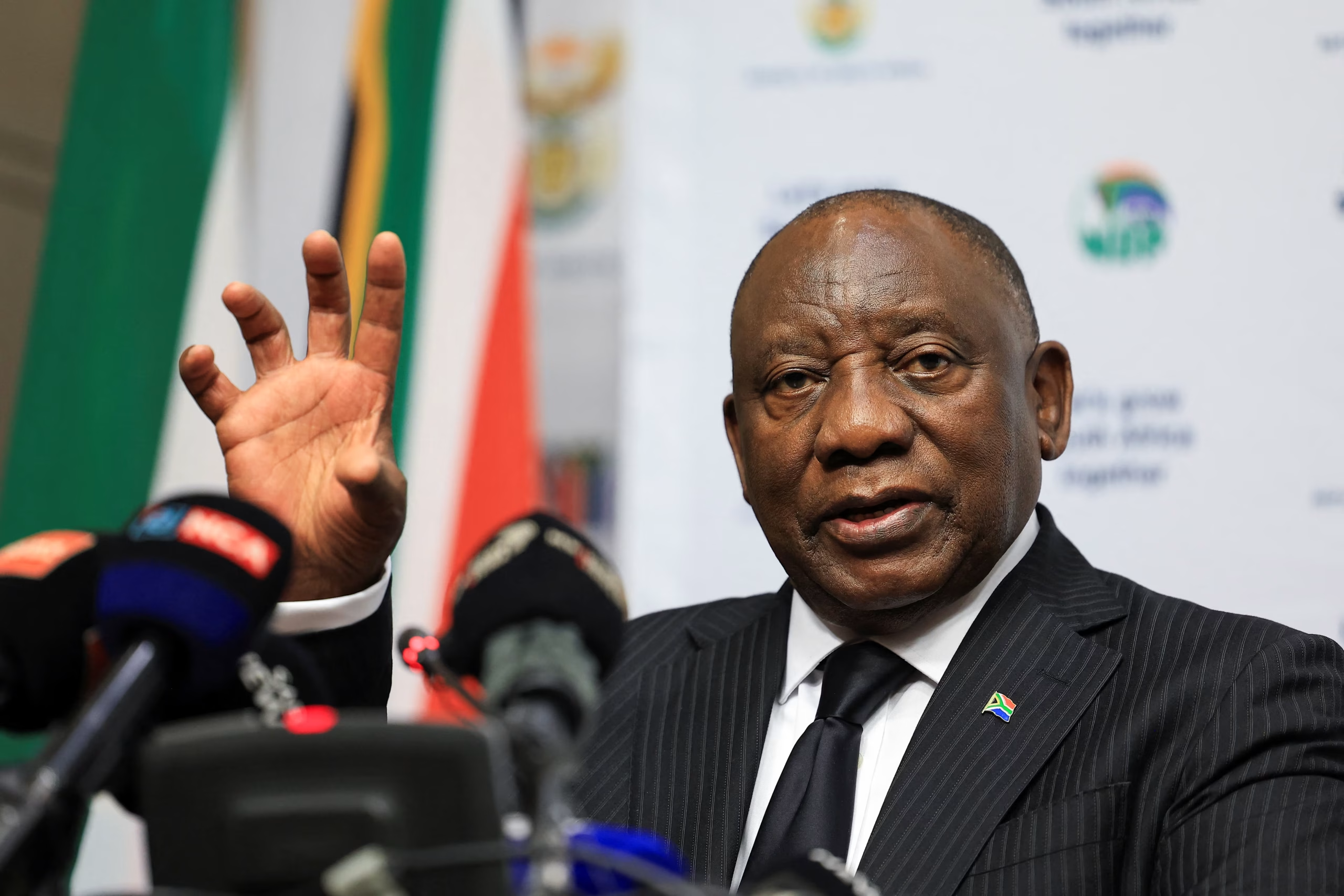
The US exit from the deal comes as no surprise, given President Donald Trump’s skepticism toward climate change initiatives. His administration has frequently clashed with South Africa over various policy matters, including land expropriation and foreign relations. While the specific reasons for the US withdrawal were not detailed, a statement from South African President Cyril Ramaphosa’s office confirmed that notification had been received.
It remains uncertain whether the US has also withdrawn from similar JETP agreements with Indonesia and Vietnam. These programs, originally conceived in 2021, were designed to leverage public and private sector funding to help large developing nations reduce their reliance on coal and transition toward renewable energy sources.
Challenges in Implementing the JETP
South Africa, which relies on coal for approximately 80% of its electricity generation, has one of the highest carbon footprints among the G20 nations. The JETP funding was contingent on the country making tangible progress in reducing its dependence on fossil fuels. France and Germany have played a leading role in financing efforts, providing €1.5 billion ($1.6 billion) in concessional loans to date.
Despite its ambitious goals, the JETP has encountered significant obstacles, including slow financing progress, political leadership changes in Indonesia and Vietnam, and the logistical complexities of shutting down coal-fired power plants. Many of South Africa’s aging power plants are nearing their mandated closure dates, with some already operating beyond their intended lifespan. However, the country’s ongoing electricity shortages have fueled political resistance to plant closures, making the energy transition a highly contentious issue.
A Global Perspective on Energy Transition
While the JETP initiative has been a groundbreaking model for international climate finance, it represents only a fraction of the total investment required to achieve global net-zero emissions by 2050. According to a recent report by BloombergNEF, annual global investment in energy transition reached $2 trillion in 2023. However, this figure accounts for just 37% of the total estimated investment needed to stay on track for a sustainable future.
Despite the US withdrawal, discussions among international partners are ongoing to ensure momentum for the JETP is maintained. The commitment of other stakeholders will be crucial in determining the program’s long-term success and South Africa’s ability to meet its clean energy targets.
The situation remains dynamic, with further developments expected as global climate finance strategies evolve. Investors and policymakers will be closely monitoring the progress of the JETP and similar initiatives in other developing economies.